
Spain’s Overcrowded Homes Crisis: An Emerging Concern
In the midst of a persistent housing crisis, Spain faces a growing problem with overcrowded homes—a phenomenon often associated with poverty and inadequate living conditions. The issue is particularly significant as immigration trends exacerbate the situation, leading to a sharp increase in the number of residents per household.
Understanding Overcrowded Homes
Overcrowded homes, as defined by both the Instituto Nacional de Estadística (INE) and Eurostat, are those that lack sufficient space based on specific criteria. This includes not having a room for each couple, individual tenants over 18 years old, or every two young people of the same sex aged between 12 and 17. The result is a calculable “overcrowding rate” that provides insight into living conditions across the country.
The Data Behind the Crisis
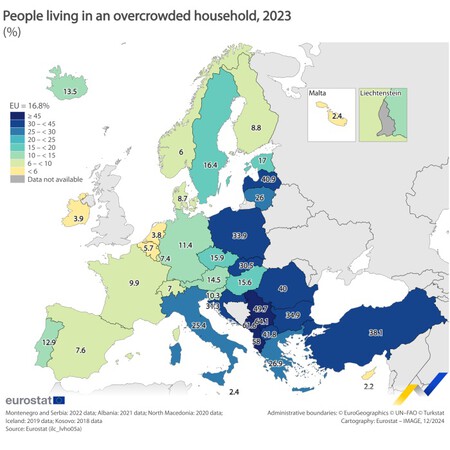
Eurostat data reveals a troubling trend: the overcrowding rate in Spain has increased from 5% in 2010 to 9.1% in 2024. While these figures may seem modest compared to other European nations—like Italy (23.9%) or Germany (11.5%)—the rapid increase over the years suggests a critical shift in living conditions. Millions, about 4.4 million people, now find themselves in overcrowded environments, highlighting the urgency of addressing this issue.
A Broadening Gap
Despite being lower than the EU average of 16.9%, Spain’s rate is notably rising compared to its neighbors. Between 2009 and 2024, Spain witnessed a staggering 75% increase in overcrowded households, marking it as one of the few countries in the EU where the overcrowding rate is on the rise.
Who is Affected?
The impact of overcrowding is not uniform across the population. It is particularly prevalent among renters compared to homeowners. Foreign-born residents, especially from non-EU countries, are also more likely to live in crowded conditions, further complicating the landscape of housing in Spain. Young people born in Spain may experience similar frustrations, often forced to return to parents or share cramped living spaces as they struggle with access to housing.
Factors Contributing to Overcrowding
Several critical factors are driving the increase in overcrowded homes.
Rising Housing Prices
The surge in housing prices is a significant contributing factor. Recent reports indicate that average rents have risen by 10.9% over the past year, reaching levels not seen since 2006. For many individuals, especially the youth, entering the housing market has become increasingly difficult—often forcing them to rely on family assistance for purchasing homes.
Demographic Shifts
The population of Spain has surged to nearly 49.3 million, largely driven by immigration. While the overall number of births has declined, a notable increase in residents from abroad—particularly within communities like Hispanic American populations in Madrid—fuels further housing pressure.
The Other Side of the Coin
Interestingly, while overcrowding rates have risen, single-person households have also become more common. Data indicates almost 5.54 million single-person households in Spain, reflecting shifting societal norms linked to aging populations and cultural changes.
Conclusion
As Spain grapples with rising overcrowding rates, it is essential for policymakers and stakeholders to focus on sustainable housing solutions. Addressing both rental market challenges and the distribution of living spaces will be crucial in ensuring that all residents have access to safe and adequate housing.