
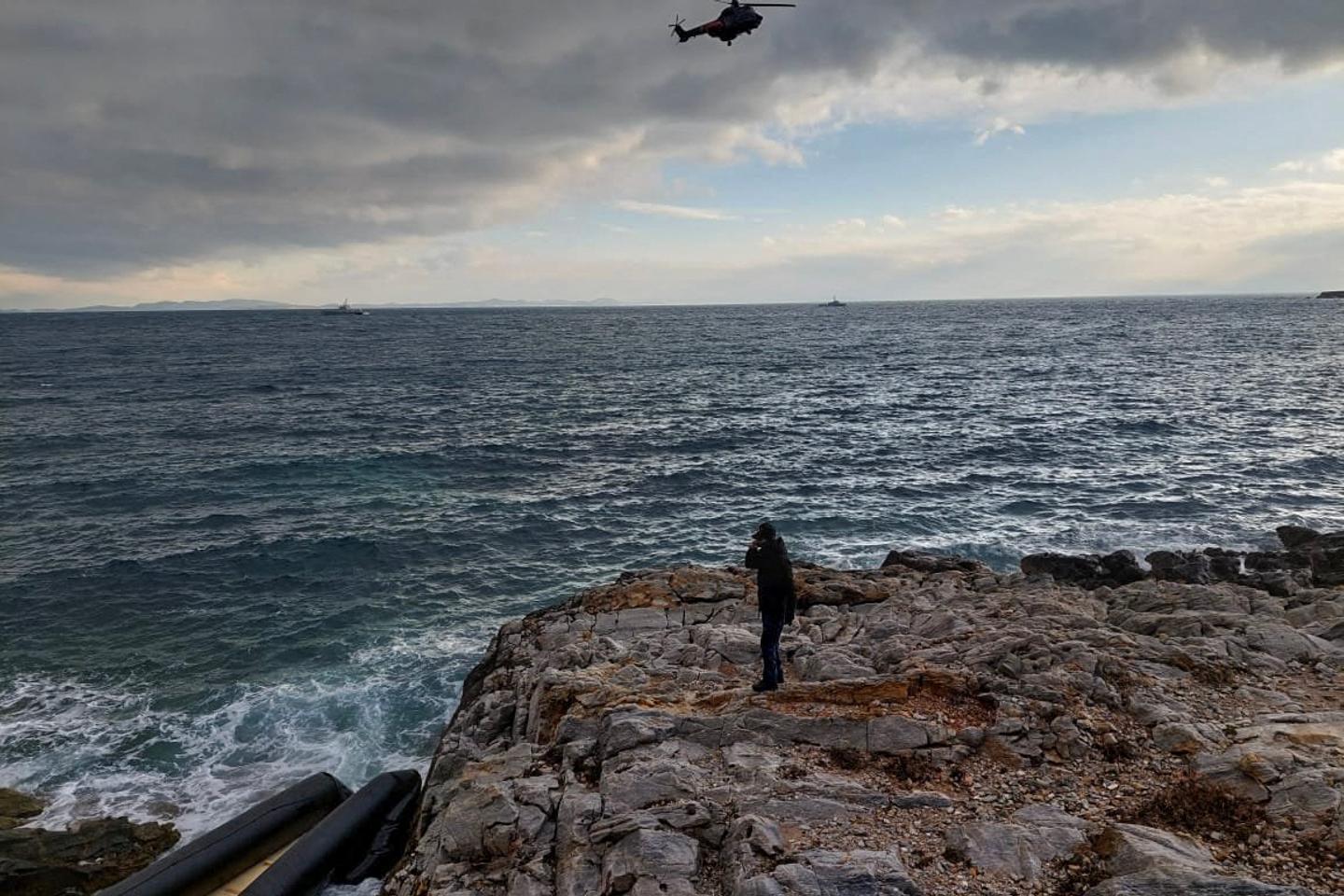
In recent days, the Greek authorities have successfully rescued over 500 migrants , primarily men, from perilous situations at sea near the island of Crete . According to reports from the France-Presse agency, these operations took place during a series of individual search and rescue efforts, highlighting the ongoing challenge Greece faces as a crucial entry point into Europe for those fleeing conflict and poverty.
Rescue Operations Off the Coast
On a particular Saturday, 280 individuals , including 13 minors , were rescued through five separate interventions. These actions were concentrated mainly around the small island of Gavdos , located south of Crete. A significant rescue involved a group of 53 people who had landed on an inflatable boat, reportedly after departing from Libya. They disclosed that they had paid between 150,000 and 200,000 Egyptian pounds (equivalent to €2,600 – €3,500 ) for the dangerous journey to Greece. Unfortunately, among this group, a 24-year-old Sudanese , alleged to be part of the smuggling operation, was arrested and is now facing legal proceedings .
Diverse Nationalities Among the Rescued
This surge of rescue operations occurred after a total of 263 people —including ten minors—were saved on Friday. Most of these migrants originated from Tobrouk, Libya , as they attempted to reach Greece. Authorities have reported that among the rescued are mostly Sudanese , Egyptian , and Bangladeshi nationals, reflecting the diverse backgrounds of those seeking better opportunities in Europe. Additionally, three Sudanese and two Egyptians , suspected of being smugglers, are also being prosecuted.
The Societal Impact of Migration
Greece has increasingly become a primary gateway to Europe for many escaping war and poverty from regions such as Asia , Africa , and the Middle East . Traditionally, routes have included crossings from the Turkish western coasts to the nearby Greek islands . However, in recent years, there has been a notable increase in the use of a new migratory route, south of Crete . These dangerous crossings have been marked by frequent shipwrecks , resulting in devastating human loss.
Tragic Maritime Incidents
One of Greece’s most tragic maritime disasters occurred on June 14, 2023 , when an old and overloaded trawler sank off the Peloponnese Peninsula . With over 750 individuals aboard, over 600 lives were lost, underscoring the severe risks associated with these journeys. Only 82 bodies were recovered, and 104 people survived, leading many survivors to file a collective complaint against the Greek coast guard, alleging a delayed response that failed to protect those at sea.
The Consequences of Migration Policy
The circumstances surrounding this ongoing perilous migration have drawn attention to the policies enacted by Greek authorities aimed at regulating and controlling the influx of migrants. As the number of rescue operations increases, there is growing scrutiny of the response capabilities of the Greek coast guard and the effectiveness of existing migration policies. Many advocate for increased resources to ensure better safety measures and timely responses to distress calls.
International Response to the Crisis
The international community has become increasingly aware of Greece’s role in the migrant crisis. NGOs and humanitarian groups emphasize the need for a holistic approach to address the root causes of migration, including conflict resolution , economic development , and human rights protections in migrants’ home countries. Additionally, there is a pressing call for collaborative efforts among European nations to share responsibility and provide asylum support to those seeking safety and stability.
In light of the ongoing migrant crisis, the actions taken by Greek authorities in the coming weeks and months will be crucial. As the situation continues to evolve, the need for effective policy , consistent support , and humanitarian approaches remains imperative in addressing both the immediate challenges and the long-term consequences of migration in the region.