
The Rise of Neon: Turning Conversations into Cash
The sale of personal data is not just a speculation anymore; it is a growing reality that has recently manifested in various formats. A remarkable example is Spotify , where a new service has emerged, enticing users to share their listening profiles and summaries in exchange for payment. The concept hits close to home, transforming our seemingly benign musical habits into a commodity. Following this trend is the application Neon , which takes this concept further by diving into the sensitive realm of phone conversations —where our privacy literally becomes a product.
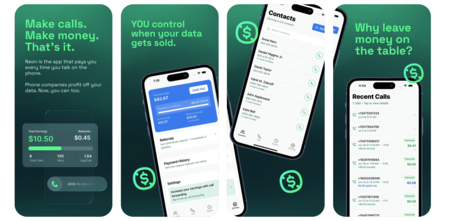
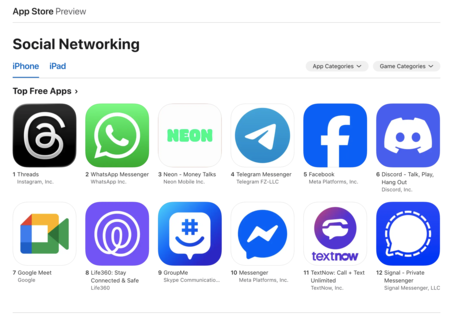
Neon’s premise is straightforward yet unsettling: “Speak, record, and charge.” The app claims users can earn “hundreds or even thousands of dollars a year” by allowing their dialogues to serve as training material for artificial intelligence systems. The marketing strategy paid off brilliantly; in just a few days, it shot up to the top three spots in the Social Networks category on the U.S. App Store .
How Neon Works
So, how exactly does Neon function? The app’s model ensures that every conversation can translate into income. It offers compensation of 30 cents per minute for calls made between two Neon users, while conversations with external parties yield 15 cents per minute . Notably, there is a maximum payout cap of $30 per day , along with a referral system that rewards existing users with an additional $30 for each new signup they refer. According to Neon’s privacy policy , the ability to record calls impacts both the caller and the receiver, provided both parties are using the application.
Conditions of Use
While monetary incentives attract users, the fine print in Neon’s Terms of Service sheds light on the app’s real implications. Users grant the company a “worldwide, exclusive, irrevocable, and transferable” license over their recordings, including rights to modify, sell, or distribute the audio in any format, whether present or future. The policy also incorporates clauses for features still in beta , free from guarantees or liabilities concerning their reliability. The extensive scope of these permissions raises questions about how extensively the recordings might be utilized.
Regional Popularity and Availability
Neon’s immediate success was both rapid and surprising. As of this writing, it holds the number 2 position among the most downloaded social applications in the U.S. App Store. However, its availability appears to be limited mainly to the United States. Preliminary tests conducted from Spain reveal that the app is not available for download in that region.
A Major Security Failure
The excitement surrounding Neon took a sharp turn when a technical analysis unveiled a significant security flaw . Reports from TechCrunch indicated that Neon had failed to adequately protect user information. By simply signing up and analyzing network traffic with tools like Burp Suite, one could easily access sensitive information about other users. Shortly after these findings became public, the app’s founder minimized the situation, announcing a temporary shutdown “for security purposes” without acknowledging the data breach. What was compromised was particularly sensitive:
- Telephone numbers tied to user accounts
- Public links to audio recordings
- Complete call transcripts
- Metadata detailing call duration, date, and earnings
This exposure of personal information is far from trivial. With such data, it becomes feasible to reconstruct private conversations and associate them with identifiable individuals. The potential risks range from identity theft to the manipulation of synthetic voices.
Neon’s Official Response to the Crisis
In response to the allegations, Neon asserted that their processes ensure user protection, including anonymity of conversations and the omission of personal details upon sale to vetted companies. Yet, the revealed shortcomings cast doubt on the effectiveness of these assurances. Following the app’s temporary closure, Neon’s official communication hinted at “enhancing security layers,” notably avoiding any admission of the breach that occurred.
Ultimately, the rise and fall of Neon raises pertinent questions: What is the true value of our privacy when artificial intelligence demands more and more data to function? The model of monetizing conversations could reemerge in different formats, signaling a real shift in how personal data is viewed and utilized. What transpired in the United States serves as an early warning that we are navigating through scenarios that blur the line between convenience and privacy invasion. It is a personal choice that every user must consider carefully.
Images | Xataka with Gemini 2.5
In Xataka | A new generation of robots promises precision and efficiency. It also opens the door to cybersecurity risks.