
Nvidia and the H20 Chip: Unpacking the Controversy Surrounding US-China Trade Relations
A little over a month ago, Nvidia achieved what seemed almost impossible: the United States government permitted the sale of its H20 chip to China. This decision followed an April ban, which had significant financial implications for the company; Nvidia reported a $15 billion drop in revenue. However, the celebrations were short-lived when U.S. Secretary of Commerce Howard Lutnick made comments that drew ire from Beijing.
What Lutnick Said
On July 15, the day following the lifting of export controls on the NVIDIA H20, Lutnick was quoted in a statement to CNBC asserting, “we do not sell our best things, nor the best best, not even the best thirds.” While technically accurate—given that the H20 is not on par with top-tier chips like the NVIDIA H100 , H200 , or B200 —his comments were perceived as insulting in China.
Why It Matters
The implications of Lutnick’s remarks are significant. As reported by the Financial Times, some Chinese officials regarded the comments as offensive. In retaliation, China announced restrictions on purchases of the NVIDIA H20, mandating that companies with existing orders justify their purchases. As a result, many orders are being delayed or even reduced. A representative from a Chinese data center operator noted, “Buying chips is not prohibited, but it has become politically incorrect.”
As per Bloomberg, Chinese authorities have sent formal notices urging national companies to discontinue the use of H20 chips, especially for government-related projects. The Cyberspace Administration of China (CAC), the National Development and Reform Commission (NDRC), and the Ministry of Industry and Information Technology (MIIT) have formed a coalition to respond to Lutnick’s comments.
More Fuel to the Fire
The communications from Chinese authorities are largely informal but represent another escalation in Nvidia’s challenges in the region. The CAC is questioning responsible parties at NVIDIA in China to ensure that the H20 does not pose a security risk. The company maintains a clear stance: “No backdoors, no kill switches, no spyware” is the message they aim to convey. Unfortunately, the escalating tension between the U.S. and China leaves Nvidia with limited options.
The ability to sell chips in China has resulted in Nvidia sacrificing 15% of its total export income from the region, a significant concession made to alter its commercial dynamics. Still, it appears increasingly insufficient given the backlash from Lutnick’s comments. China is a crucial market for Jensen Huang’s Nvidia, but recent developments are turning a once-promising landscape into a nightmare. The U.S. is caught in a dilemma: sell AI hardware to China or withhold it to foster domestic development.
Government Ambitions vs. Reality
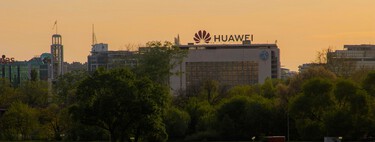
The Chinese government’s move to restrict the purchase of H20 chips reflects a broader agenda to prioritize domestically produced semiconductors. They are pushing data centers used by the state to utilize at least 50% of locally sourced integrated circuits. This initiative favors Chinese firms like Huawei , which is already gaining traction with its Ascend 910D and Ascend 920 chips, targeting performance upgrades over NVIDIA’s stronger offerings.
However, domestic production capabilities are limited. Chinese companies, including Tencent and Alibaba , still prefer to utilize Nvidia’s GPUs due to their superior performance. Though China has developed an alternative to CUDA , Nvidia remains the dominant player in the AI software market. This has led to a booming black market for Nvidia GPUs in China. The pressing question remains: how will this scenario evolve should China implement stricter measures?
Image | Nvidia and Flickr
In summary, the current situation presents a complex web of economic and political challenges for Nvidia, which must navigate a rapidly shifting landscape amid growing tensions between the U.S. and China. The future of the H20 chip and Nvidia’s presence in the Chinese market could hinge on external factors that are increasingly beyond its control.