
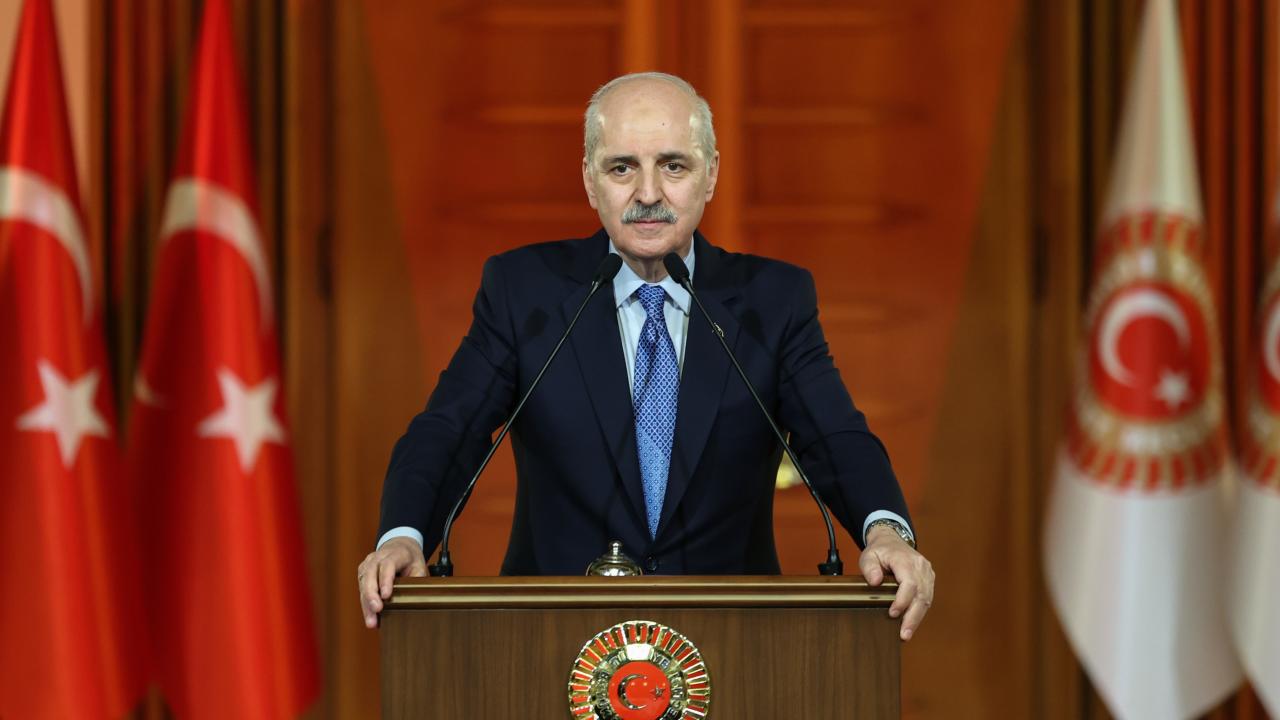
The Recent Election for Turkish Parliament Speaker: A Breakdown of the Third Round Vote
In a significant political event, the third round of voting for the position of Speaker of the Turkish Grand National Assembly (TBMM) recently took place, featuring 529 deputies participating in the process. This election is crucial as it showcases the dynamics of coalition politics and the power struggles within the Turkish political landscape.
Participants and Results of the Third Round Vote
The voting process had varying results among the candidates. The leading candidate, Numan Kurtulmuş from the ruling Justice and Development Party (AK Parti), secured 329 votes. In contrast, his closest rival, Uğur Bayraktutan, representing the Republican People’s Party (CHP), received 118 votes. Other participants included Osman Cengiz Çandar from the Democracy and Progress Party (DEVA) who gathered 18 votes, followed by Mustafa Cihan Paçacı from the Good Party (İYİ Parti) with 26 votes, and Mehmet Karaman from the New Way Party with 26 votes.
The voting process reflected a keen competition, where one vote was cast as a blank, and 11 votes deemed invalid, contributing to the overall atmosphere of scrutiny surrounding the Turkish parliament’s electoral mechanisms.
The Implications of the Results
Kurtulmuş’s reelection, supported by a majority of over 301 votes, allows him to continue leading the TBMM as Speaker. This is particularly important as the Speaker’s role is not merely ceremonial; it also carries significant influence over legislative proceedings and the overall political climate in Turkey. The fact that Kurtulmuş managed to gain such a commanding lead illustrates the underlying political alliances and loyalties within the assembly.
Moreover, the varied results underline the challenges faced by opposition parties. The CHP, despite being one of the main opposition factions, could only muster 118 votes, which reflects the current landscape of Turkish politics where the ruling party holds a commanding presence in parliament.
The Role of Family Support During the Election
During this pivotal election, Numan Kurtulmuş’s wife, Sevgi Kurtulmuş, and family were present in the viewing area of the General Assembly Hall, showcasing the personal stakes of political life. This familial support highlights the human side of politics, where leadership is intertwined with personal relationships, creating a compelling narrative amidst the legislative drama.
Family presence during such vital moments can serve not only as moral support but also as a symbol of stability and continuity for the public. In an era where political figures are often scrutinized for their private lives, having family members witness such events can play a role in shaping public perception.
Current Political Climate in Turkey
The ongoing political atmosphere in Turkey is marked by a polarized landscape, with the ruling AK Parti facing increasing pressure from opposition factions. Over recent years, Turkey has witnessed protests and significant public discourse surrounding governance, democracy, and civil liberties. The recent election outcome will undoubtedly contribute to these ongoing discussions.
The position of the Speaker carries weight not only in legislative matters but also in the broader sense of how democracy functions within Turkey. Thus, the responsibility assumed by Kurtulmuş is substantial, as he navigates the complexities of governance while facing the demands of both his peers in the parliament and the populace outside its walls.
Conclusion
As Numan Kurtulmuş resumes his role as the Speaker of the Turkish Grand National Assembly, the implications of this election reverberate throughout the political landscape of Turkey. With a significant majority backing him, Kurtulmuş’s experience and leadership will be crucial in addressing the challenges and expectations from both the ruling party and the opposition. The success of Turkish democracy hinges on effective governance, and the outcomes of this election serve as a vital piece in the ongoing puzzle of Turkish politics. The coming months will be critical in determining how these dynamics will shape legislative processes and the state of the union moving forward.