
Complex Military Operations: Analyzing the Official Narrative
In contemporary military operations, open-source data—including images, coordinates, and videos—can allow analysts and independent observers to reconstruct scenarios with an unprecedented level of detail. By leveraging this information, analysts have begun identifying locations and movements while also uncovering operational failures in real-time. It turns out that sometimes, the truth lies not just in what is stated, but in how various pieces of evidence fit together—or don’t.
Official Narrative: The Rescue Operation
The official account presents a dramatic “Mission Impossible” style rescue operation. According to this narrative, U.S. special forces undertook a large-scale mission to recover a crew member from a downed F-15E Strike Eagle in Iran. The pilot, who managed to survive due to his training, signaled for help from an elevated area while elite teams located and extracted him amid multiple confrontations with Iranian forces. However, from the outset, the scale of resources expended—amounting to hundreds of millions of dollars—has raised eyebrows, raising questions about whether this was merely a conventional rescue mission.
Geospatial Inconsistencies
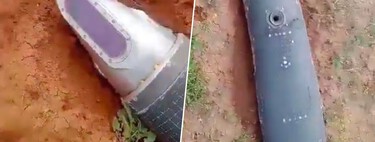
More than 48 hours post-rescue, a thorough analysis by independent sources revealed troubling inconsistencies regarding the geolocation of key events. Initial reports placed the downed aircraft approximately 80 kilometers off Iran’s southwestern coast. Yet subsequent evidence revealed depictions and wreckage hundreds of kilometers away, near Isfahan, suggesting a significant discrepancy that challenges the entire timeline of events.
The Role of Geolocation Analysis
The analysis relies heavily on geolocation data, which not only identified where the wreckage of American helicopters and C-130 transport planes was found but suggested that they did not correlate with the official rescue narrative. This inconsistency offers critical insights into the credibility of the reported events.
Emerging Hypotheses: Cover Operations and Nuclear Implications
The perplexing proximity of the recovery operation to one of Iran’s key uranium storage facilities opens doors to alternate hypotheses. Some analysts posit that the rescue operation might have served as a ruse for a far more ambitious mission, potentially including intelligence gathering or even the extraction of enriched uranium. This would align with quotes from former President Trump, who previously hinted at operations that could take place deep within Iranian territory.
Elements of a Deceptive Strategy
Additional layers to the story emerge when considering potential disinformation efforts orchestrated by intelligence agencies. With the complexities of military endeavors and the ambiguity surrounding U.S. operations in volatile regions like Iran, one must contemplate that public narratives may serve strategic purposes beyond immediate objectives.
Conclusion: The Bigger Picture
The integration of open-source intelligence offers a fresh perspective on military operations, allowing for the construction of narratives that diverge significantly from official versions. The possibility that the U.S. may be engaged in clandestine operations deep within foreign territories not only raises ethical questions but also underscores the evolving nature of warfare in the modern era.
A convergence of analysis and geolocation data allows us to challenge the official story and consider unsettling alternatives. Whether these ideas remain theoretical or reveal an impending reality, they fundamentally reshape our understanding of military missions today.