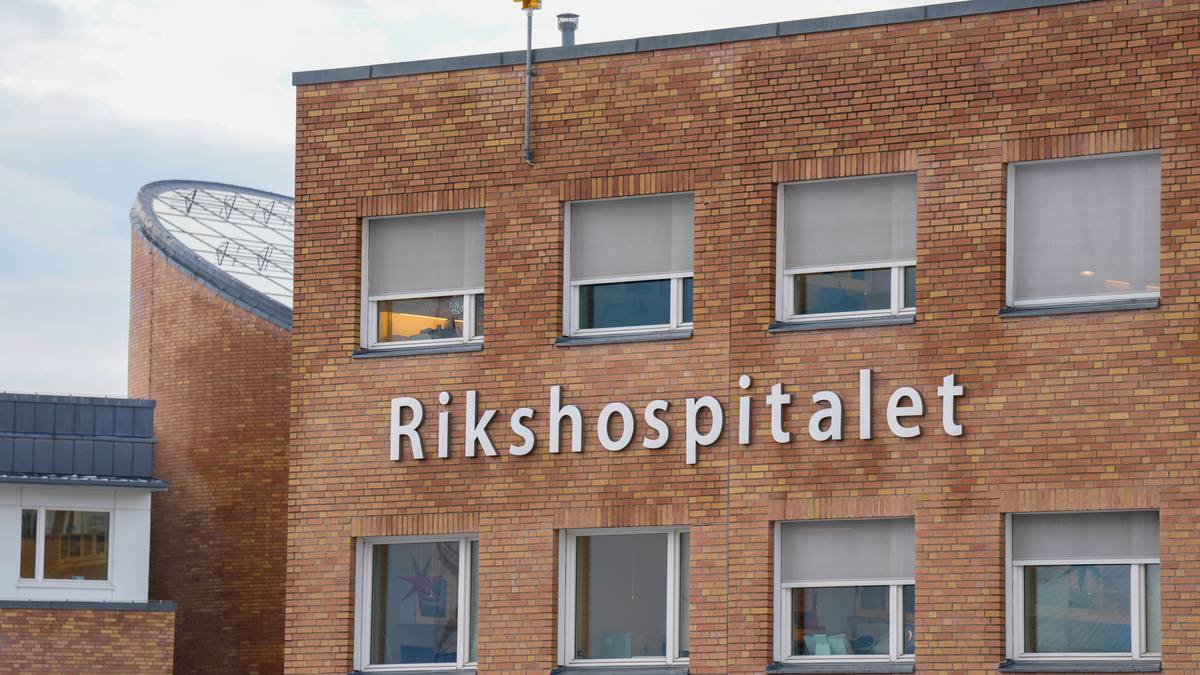
He received a bone marrow transplant four years ago, and has since then not had any signs of remaining viruses. This is what a professor at internal medicine research and chief physician at Rikshospitalet, Marius Trøsid, says to VG. He led the project together with senior Anders Myhre. Trøsid calls it a big breakthrough. The transplant was done by using stem cells from the brother, which had an HIV-resistant mutation. This mutation makes the immune cells resistant to HIV. Malin Holm Meyer-Myklestad is a consultant for the department at microbiology at OUS. She has led the laboratory work, and presented the results with Marius Trøsid at a conference in San Francisco. Trøsid is a professor at internal medicine research, and a consultant at the National Hospital. Photo: Private news first wrote that the patient was from Oslo. The right thing is that the man is from Eastern Norway. The case was corrected at 06.55. – Like finding the needle in Høstakken Trøsid tells news that this is the first reported course case in Scandinavia. -And worldwide, there are five or six reported fairly safe cases before the “Oslo patient”. So this is still rare, and we learn a lot from every single case reported. VG writes that the patient had lived with HIV for 10-15 years when he became ill from a bone marrow disease. He received several types of treatment without recovering, but eventually the doctors found that the brother had the same type of tissue and could be a donor. Then they did not know that he also had a mutation that prevents HIV from penetrating the transplanted cells. Several departments at Oslo University Hospital have been involved, including the Department of Microbiology, Blood Diseases, Gastromedicine, Infectious Medicine and the Department of Internal Medicine Research. Photo: news Air photo has been virus -free for several years Myhre says it is incredibly lucky that the brother had both the same tissue type, and thus could be a donor with a view to the bone marrow disease and that he had this mutation. – It was very lucky! We were quite surprised by it, and had really intended to cure the bone marrow disease. The likelihood that siblings are a match and can be a donor for stem cells is 25 percent. At the same time, there is just under a 10 percent chance that a person has the mutation. The fact that the patient’s brother had the mutation was told the doctors the same day as the transplant. After the man received the healthy stem cells to replace the sick immune system, he has been virus -free for several years. The superiors say they have analyzed both blood, intestinal and bone marrow samples to look for the remaining traces of the virus. All samples show that he is most likely cured, both for the bone marrow disease and for HIV. – He feels he has won in Lotto. Having had two diseases, and suddenly being healthy, it’s a good feeling, says Trøsid to news. The samples of the man have been analyzed in a collaboration between several research groups at Oslo University Hospital and others in Europe. The picture is from the National Hospital. Photo: Emrah Senel / news New knowledge, but not a cure just for HIV Trøsid says most people who are cured get bone marrow from the donor with the same mutation as the brother of the Oslo patient. But in Geneva, a patient was cured without this mutation last year, and now they are looking for common denominators between these patients. – So our patient, along with the few others cured, will at least provide new knowledge about how HIV can be cured, says Trøsid. But using stem cell transplant as a cure is not relevant, at least not yet. – It is a treatment that is very tough, about one in ten patients die from treatment. So we only offer it to those who have an even higher risk of dying from leukemia or other bone marrow diseases, Myhren explains, adding: – But if we can carry out the treatment safer in the future, with less complications, then it is another matter. Published 11.03.2025, at. 06.29 Updated 11.03.2025, at. 09.49
ttn-69