
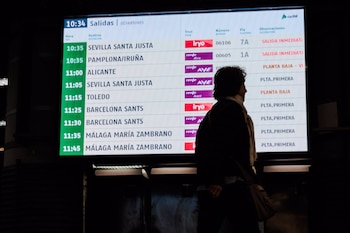
Delays Plague Madrid-Andalusia High-Speed Train Services
The high-speed trains connecting Madrid with Andalusia have again faced significant disruptions, recording delays of up to three hours. This latest incident occurred in the afternoon of Monday, October 21, 2024, due to a train fault in the section between Puertollano and Brazattas, in Ciudad Real. According to reports, the issue was first noted at 12:40 p.m., and the ADIF company communicated the impact via its social media platforms.
By late afternoon, the damaged train was successfully removed from the line, allowing services to gradually return to normal. However, the delays highlighted ongoing issues in what is one of Spain’s most vital transportation links.
Impact on Services and Passengers
Among those affected was a train operated by Ouigo from Malaga, which was scheduled to arrive at Atocha station at 6:38 p.m. The train ultimately reached its destination at 9:35 p.m., highlighting a significant disruption for travelers depending on this service. Other operators like Renfe and Iryo also reported similar delays, with many passengers left waiting at the typically bustling Madrid terminal.
Passengers experienced extensive delays as several trains adjusted their schedules. For instance, the Alvia train from Cadiz that was set to arrive in Madrid at 6:03 p.m. finally arrived at 7:19 p.m., while the AVE train from Seville, scheduled for 6:13 p.m., didn’t arrive until 7:21 p.m. Additionally, the Iryo from Malaga, with a planned arrival at 6:18 p.m., didn’t reach its destination until 7:17 p.m. Delays were commonplace, and it marked a tumultuous travel day for many.
Previous Incidents and Ongoing Issues
This isn’t the first time that passengers have faced delays on this busy route. Back in May, a theft incident involving copper wiring affected 21 high-speed trains on the Madrid-Sevilla line, leading to significant disruptions for approximately 6,300 passengers. Investigations linked the theft to individuals in Toledo with prior criminal records.
Despite this history, Monday’s incident caught many by surprise, particularly as the timeframe for resolution extended throughout the afternoon. According to a passenger traveling on the affected Ouigo train, the company confirmed a technical stop followed by passenger evacuation for transfer to another train. This could have complicated matters further, as many travelers were left uncertain about their next steps.
Limited Communication from Operators
In the wake of the incident, the response from train operators has been criticized for its lack of clarity. Adif first notified the public about the delays at 5:57 p.m.; however, neither Renfe, Iryo, nor Ouigo provided specific updates about the nature of the delays. Only Renfe and Iryo addressed individual passenger inquiries via the social media platform X. This absence of timely public communication has raised questions about how public transport services are managed during crises.
For instance, one affected Renfe user was informed that the cause of their delay stemmed from a train being detained on the route. Nonetheless, without proactive communication, passengers remained uninformed and frustrated as they waited for updates.
Implications for Future Travel
The incident on Monday serves as a reminder of the vulnerabilities in Spain’s high-speed rail network. With millions relying on these trains daily, any failure in service can have far-reaching consequences. Not only do such disruptions affect travel plans, but they also lead to greater scrutiny on the operational practices of the companies involved.
In light of these persistent issues, it is essential for train operators to enhance their communication strategies. A concerted effort to keep passengers informed during crises would undoubtedly improve the overall travel experience and might help alleviate frustrations during unexpected challenges.
The situation remains a critical reminder of the importance of reliable transport systems in today’s fast-paced world. For rail services to thrive, efficiency, reliability, and communication must be prioritized to foster trust and ensure smooth travel transitions for all passengers.