
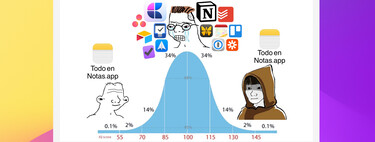
The Productivity Paradox: Why Too Many Options Can Be Detrimental
In our fast-paced digital age, it’s easy to feel overwhelmed by the sheer volume of choices we face every day. Consider Netflix: with around 15,000 titles available, many of us find ourselves binge-watching The Office for the fifth time. A similar phenomenon occurs in our productivity: we have access to an array of productivity apps , yet we often resort to jotting down tasks in a simple WhatsApp chat with ourselves.
This recurring behavior highlights a common psychological issue: when faced with an overabundance of options , our brains become paralyzed , and we frequently retreat to the familiar.
The realm of productivity tools has fallen victim to the same trap as streaming platforms . They market limitless customization as a boon, but in reality, it can be more of a burden:
- Notion allows you to create any system you can imagine.
- Obsidian boasts over 800 plugins .
- Todoist features settings for virtually every microneed of your workflow.
At first glance, this seems fantastic, but upon deeper reflection, many of us realize that we end up spending more time configuring the perfect system than actually completing our tasks.
Research by Barry Schwartz reveals that rather than enhancing our happiness, more choices can hinder our productivity and leave us feeling stalled. Each decision we make regarding configuration consumes precious mental energy, energy that could otherwise be devoted to actual work.
This leads to an intriguing contradiction: we often undervalue systems that come preconfigured , even though they may yield better results than those we’ve meticulously customized to our liking.
The solution may be counterintuitive: more restrictive systems often lead to greater productivity . Companies like Apple grasped this concept long ago. By limiting customization options on the iPhone, they have created a user experience that is streamlined and effective. Hence, limitation becomes a feature, not a bug .
This refined focus enables us to take decisive action rather than getting mired in optimization.
The key lies in selecting intelligent restrictions . Instead of pursuing the tool that promises to do everything, seek out tools that effectively handle the three tasks you genuinely need .
For example, in task management, Notion provides the capability to create relational databases complete with customizable properties, dynamic filters, and multiple views. You can categorize tasks by project, priority, context, required energy, responsible person, and even establish control panels featuring productivity metrics and progress graphics. It’s a dream for those who thrive on meticulous control.
However, while you’re crafting that “perfect system,” your real tasks continue to accumulate. You may find yourself spending more time contemplating the best organization strategy than actually working on tasks. Subsequently, once your system is finally set up, it often proves so intricate that it requires more cognitive energy to operate than simply completing the tasks manually.
In contrast, consider Things 3 . It offers just three drawers: Inbox, Today, and Someday. No excessive custom fields, no dashboards , no complex automation. While it may appear limited beside Notion, its simplicity equates to efficiency: you open the app, see what needs to be done today, execute it, and you’re done—essentially zero cognitive friction .
The evident takeaway is that productivity isn’t about having endless options; it’s about eliminating irrelevant decisions . Your mental energy is finite. Every moment spent configuring a complex system detracts from the time available for genuine creativity and productivity. The most effective systems aren’t all-encompassing but are those that make the next steps crystal clear.
In a world filled with choices, the best route to enhancing productivity often lies in embracing the simplicity of focused, straightforward solutions.