

Loneliness often carries a negative connotation. Neuroscientist Nicole Vignola pointed out in a recent conference that our brain possesses a tendency towards negativity bias , which amplifies such stigmas. According to the European Institute of Positive Psychology, “loneliness is not simply being alone; it is the ability to be with no one.” This perspective prompts us to rethink the concept of loneliness.
When understood and embraced intentionally, loneliness can serve as a fertile ground for innovation and creativity. Countless technological , scientific , and artistic breakthroughs have emerged from moments when creators intentionally distanced themselves from society to focus on their thoughts and ideas. In essence, their minds craved the solitude that allowed for profound exploration.
Many great visionaries and innovators have recognized how crucial it is to dedicate moments of their lives to solitude in order to cultivate fresh ideas.
When the Urgent Eclipses the Important
In today’s world, the “Hustle Culture” has overshadowed the importance of thoughtful reflection, as noted by The New York Times. We prioritize daily agendas that feel urgent, often neglecting the time we could spend reflecting and simply being. Yet, the ability to clear our schedules and dedicate time for introspection is a skill that Bill Gates learned from his mentor Warren Buffet . In a joint interview, Gates revealed that letting the mind rest and engage in unstructured thinking is akin to a child’s joyful release in an amusement park.
In this context, loneliness can serve as a potent ally. As highlighted in the Netflix series *”Bill Gates: Under the Magnifying Glass,”* the tech mogul takes an annual “Week of Reflection,” where he retreats to nature, disconnects from technology, and allows his mind to wander freely. This practice yielded successful innovations, including the launch of Microsoft Internet Explorer in 1995.
As Susan Cain emphasized in The New York Times, many creative minds have thrived in solitary moments. For instance, *Steve Wozniak* established the components of the first Apple solo in the early morning hours, away from distractions. Masterpiece after masterpiece in literature and art has sprung from authors and artists who intentionally sought isolation, distancing themselves from external noise to foster creativity.
The Science of Success in Solitude
Scientific researches corroborate the observations of great innovators regarding solitude . Renowned philosopher Seneca emphasized the virtue of reflection in solitude in his *Moral Epistles*. A joint study conducted by the University of Michigan and Harvard reveals that individuals with high intelligence often report greater life satisfaction when they engage in less frequent social interactions . Participants with a higher intelligence quotient tend to express greater contentment when they limit social contact.
This finding resonates with parallel research from *University of Buffalo*, which suggests that individuals who voluntarily enjoy solitude report elevated levels of creativity and self-reflection .

Embracing Solitude
In a recent interview with CNBC, Joseph Jebelli, a postdoctoral researcher at the University of Washington, highlighted the significant role that time spent alone plays in personal and professional development. He suggests that while there is no universally perfect amount of solitude, recognizing and valuing these moments can lead to improved cognitive functioning and creativity. Jebelli recommends starting small—dedicating just 10 minutes a day to solitude in a quiet space for breath and reflection can convey powerful benefits to the mind.
Being selective about social engagements is equally essential. Many people find themselves surrounded by individuals with whom they share little connection, leading to increased cortisol levels that adversely affect mental health. More individuals are embracing journeys or retreats alone as a method to rediscover their core selves and combat social overstimulation, as highlighted by documented trends in media.
This resurgence in valuing solitude reflects a shift towards self-discovery, reinforcing self-esteem and equipping individuals with psychological tools to tackle day-to-day challenges. Loneliness need not be a source of despair; in fact, it can be the fertile soil from which greatness springs.
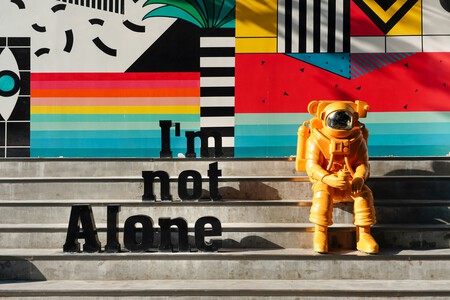
Images from Unsplash and Flickr showcase the beauty of solitude, complementing the essential role it plays in achieving personal and professional success.