
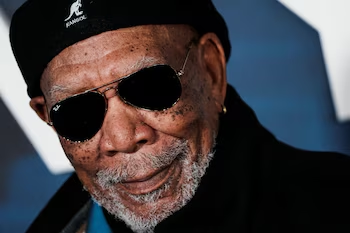
Morgan Freeman’s Stand Against AI Voice Cloning
Morgan Freeman has taken a strong position against the use of artificial intelligence to clone his voice. In a recent interview with The Guardian, the celebrated actor articulated his concerns during the promotional phase of his latest film, Now You See Me: Now You Don’t.
Concerns Over Professional Identity
Freeman expressed his opposition to this practice, emphasizing the risk of losing control over his professional identity. He highlighted that the unauthorized use of AI-generated clones of his voice could infringe upon the rights of artists. “You are stealing from me,” he stated, addressing the ethical implications of voice cloning.
Legal Action Against Violators
In light of discovering cases where third parties have replicated his voice using AI without permission, Freeman has engaged his legal team to address the issue promptly. He described the situation as both annoying and worrying, underscoring the importance of preserving artistic integrity. According to Freeman, this type of misappropriation not only undermines his identity but also poses occupational risks for all actors.
The Evolution of AI in the Industry
The debate surrounding the implications of AI in the audiovisual realm is intensifying. Freeman’s dissent stands in stark contrast to other figures, such as James Earl Jones, who have approved the use of their voices after death. Freeman’s firm stance prioritizes the need for authenticity and advocates for the protection of labor rights in an increasingly digital industry.
Unique Artist Identity at Risk
Freeman is also critical of the emergence of AI-generated characters, like Tilly Norwood, described as the first actress created entirely by artificial intelligence. He argues that such artificial constructs lack the emotional depth and realism required for genuine storytelling, potentially complicating opportunities for real artists in the industry.
Calls for Regulatory Frameworks
The Screen Actors Guild in the United States is also voicing its commitment to defend performers against the encroaching influence of AI. Artists across various fields are advocating for clear regulatory frameworks that outline protections for image and intellectual property against improper use.
Conclusion: The Future of Authentic Creativity
In his remarks, Freeman underscores a broader concern regarding the future of creativity in an age dominated by technology. He warns that the proliferation of virtual actors could lead to precarious working conditions for professionals who thrive on authenticity. As the film industry grapples with these unprecedented challenges, the ongoing discussions highlight a critical need to reassess regulations and protections involved in creative work.
In essence, Morgan Freeman’s stance serves as a rallying cry for the preservation of artistic integrity in an age where technology’s reach continually expands, ensuring that the work of real artists is respected and valued.