
Protecting Warships: A Costly Endeavor
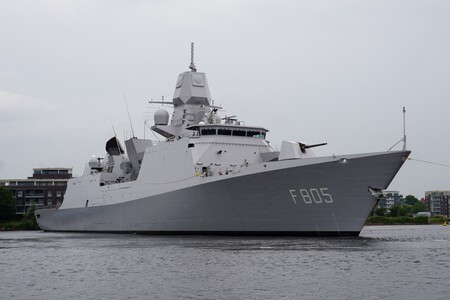
Protecting military vessels like warships involves significant resources. The costs accumulate through advanced sensors, intricate protocols, dedicated personnel, and robust weaponry—all aimed at minimizing vulnerabilities and unnecessary exposure. However, a recent incident involving the Zr.Ms. Evertsen, a frigate of the Netherlands Navy integrated into the French aircraft carrier Charles de Gaulle’s battle group, exposes a shocking lapse. In an unexpected twist, the frigate’s position was tracked in real time using a relatively inexpensive Bluetooth tracker sent through military mail.
The Humble Beginning of a Major Security Breach
This story doesn’t stem from a complex technological oversight but rather an oddly simple method: a postcard. The Bluetooth tracker was reportedly introduced into the Evertsen via the military postal service. While the exact device remains unidentified, it highlights a significant risk, as various low-cost trackers like the Apple AirTag could easily have been employed, raising concerns about low-tech vulnerabilities undermining high-stakes operations.
A Critical Mission
The incident gains weight when considering the frigate’s critical role during this operation. As part of the escort team for the Charles de Gaulle, the frigate’s primary objective was to protect the aircraft carrier from potential air and missile threats. Consequently, the location of the Evertsen became highly sensitive information within the context of an ongoing military mission. More than just tracking movement, this oversight might expose vital components of military strategy.
Understanding the Security Lapse
The most alarming aspect of this situation is not just that a tracker was able to infiltrate military communication channels, but what it indicates regarding outdated operational procedures. Official reports suggest that while packages went through X-ray scanning, envelopes were not subjected to the same scrutiny, creating a critical gap in security protocol. This seemingly minor oversight proved significant enough to compromise the deployment’s confidentiality.
The Path from the Netherlands to Crete
Once the tracker slipped past initial filters, it transitioned from a hypothetical risk to a tangible reality. Reports reveal the tracker’s signal could trace a route from the Netherlands to Crete, stopping at Den Helder and Eindhoven Airport before finally arriving at Heraklion port. Images corroborated the signal, showing the Evertsen docked safely. Following its departure on March 27, the frigate continued broadcasting its position for nearly 24 hours, skirting the Cretan coast until it stopped transmitting near Cyprus.
Official Reaction and Reforms
After the media unearthed this security breach, the Dutch Ministry of Defense took corrective measures. They prohibited the shipment of battery-powered greeting cards to the Evertsen, announcing a thorough review of military mail protocols. Although the ministry stated that the tracker was discovered while sorting mail after the frigate had departed, it also acknowledged that the ship could be tracked at sea, prompting assurances that this didn’t pose an immediate operational risk.
Key Takeaways from the Incident
This episode serves as a stark reminder of prevailing vulnerabilities even within protected military missions. While the frigate operates amidst sophisticated defenses, a low-cost consumer device managed to expose a critical tracking window. This incident underscores that, as of 2026, maintaining security is not solely reliant on large technological systems but also depends on meticulous attention to detail at every level.
Images | Ein Dahmer | Xataka with Nano Banana
In Xataka | France was moving its aircraft carrier without revealing its location—until a runner onboard uploaded activity to Strava.