
The Story Behind the Famous Windows XP Activation Key
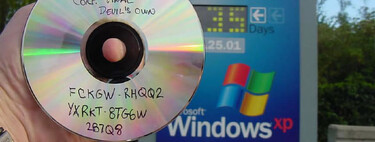
For many users, myself included , the activation key for Windows XP—”FCKGW-RHQQ2-YXRKT-8TG6W-2B7Q8″—became almost second nature. This key allowed countless individuals to install a legitimate copy of the operating system released by Microsoft in October 2001 . However, the origins of this activation key have remained shrouded in mystery until recent revelations.
The Revelation by Dave W. Plummer
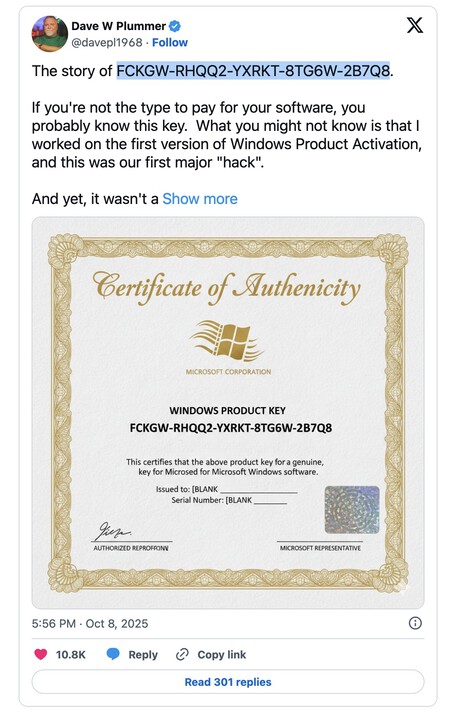
Dave W. Plummer, a well-respected engineer and developer who dedicated his career to Microsoft , recently shared insights regarding this infamous activation key. Having played pivotal roles in developing features like the Task Manager and ZIP folders , Plummer also contributed to the birth of the Windows Product Activation (WPA) system. His unique experience empowers him to shed light on how this key made its way into the hands of the public. This fascinating story unfolded through a conversation he shared on Twitter.
The Key’s Unexpected Journey
Contrary to initial assumptions, Plummer clarified that the activation key was not stolen ; rather, it was the result of a leak . He recounted how a mistake during development led to a “ disastrous leak ” that had unintended consequences. In an era before conventional social media platforms, the key’s spread was primarily facilitated by a warez group called devilsOwn . Just five weeks before Windows XP’s official launch, the key was disseminated across IRC , online forums, Usenet groups, and P2P applications like eDonkey and KaZaA .
The Mechanism of Activation
The WPA system was designed to generate activation keys based on the specific hardware it was installed on. This involved sending identifiers for components like the CPU , RAM , and others back to Microsoft for validation. If any discrepancies were detected, the installation would be flagged as pirated or fraudulent.
Interestingly, the key “FCKGW-RHQQ2-YXRKT-8TG6W-2B7Q8” was a valid volume license key and ended up in the so-called “white list” of the verification system. This meant it was assumed to be part of an enterprise license, allowing users to claim they had activation keys without an actual verification process from Microsoft’s servers. Essentially, it acted as a ” master key ” that bypassed the usual activation hurdles.
Impact on Windows XP Functionality
By utilizing this key, users could install a fully functional version of Windows XP without being bombarded by warnings regarding activation status. There were no reminders or countdown warnings, and users could even receive system updates . Although Microsoft did eventually blacklist this activation key, new exploits allowing continued use of the operating system emerged, prolonging the key’s life well beyond its intended expiration.
Although Plummer mentions that although you could technically still use the FCKGW key on older installation disks, Microsoft’s validation servers have been offline for years. Even if someone had access to a copy of Windows XP, the key would now be classified on the blacklist, preventing any legitimate validation.
Legacy of Windows XP
Looking back, it is clear that the story of Windows XP and its activation key illustrates how technological missteps can have widespread and lasting effects. Despite the age of the operating system, it has maintained a following, with some even developing modern browsers specifically for Windows XP. These anecdotes serve as stark reminders of the digital age’s evolution and the unforeseen consequences that can arise from it.