
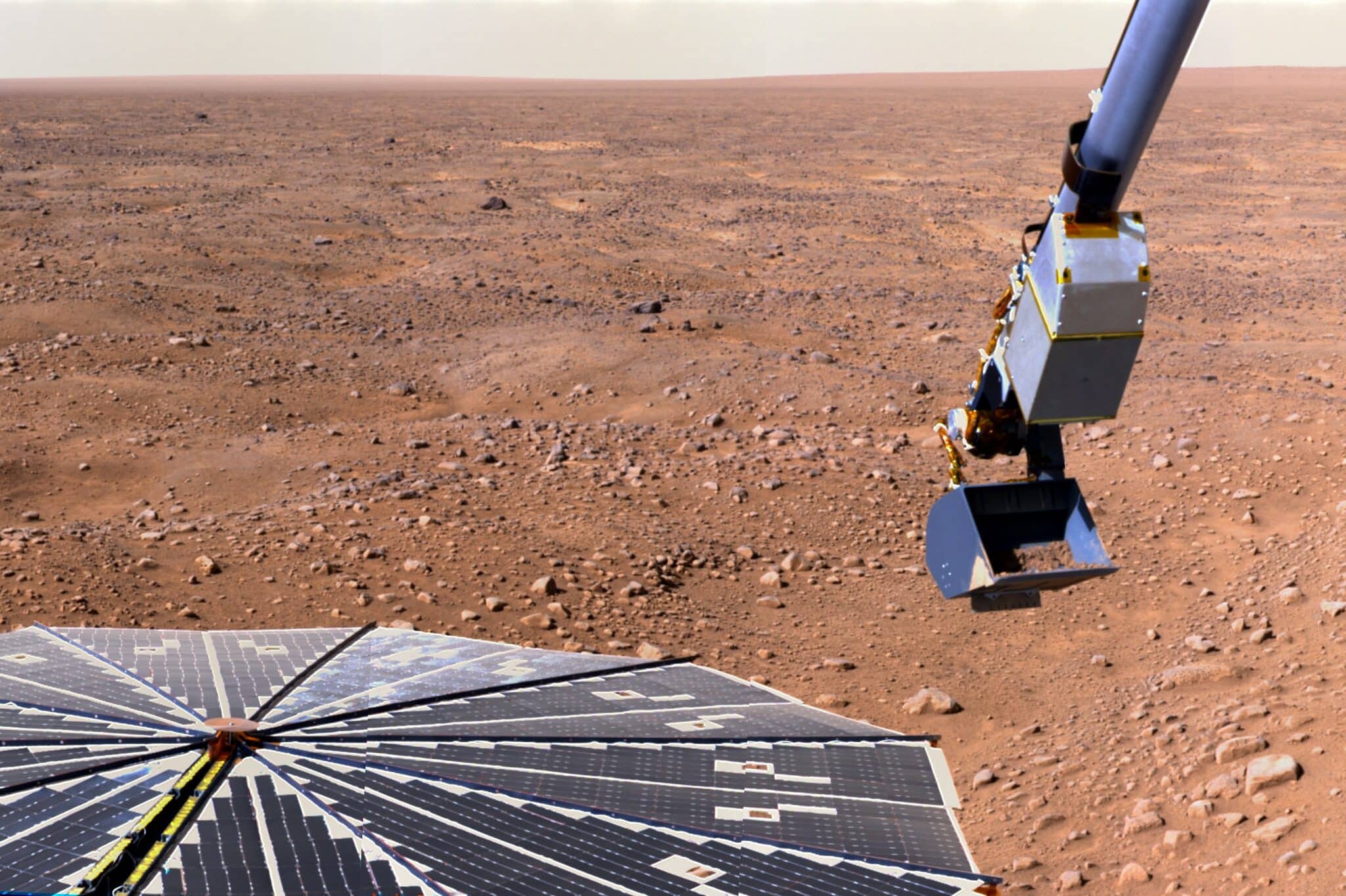
What if life on Mars originated… from Earth? This scenario has resurfaced recently following the publication of a study revealing the presence of dozens of unknown microbes in one of NASA’s ultra-secure clean rooms. Even more troubling is the fact that this room housed the Phoenix lander shortly before its departure to the red planet in 2007.
Are Clean Rooms Really Clean?
NASA takes interplanetary contamination very seriously. Before each space mission, spacecraft are meticulously cleaned in “clean rooms”: sterilized, pressurized, and filtered environments where personnel are required to wear full-body suits. The goal is to prevent any accidental transfer of Earth microbes into space — or the return of extraterrestrial organisms.
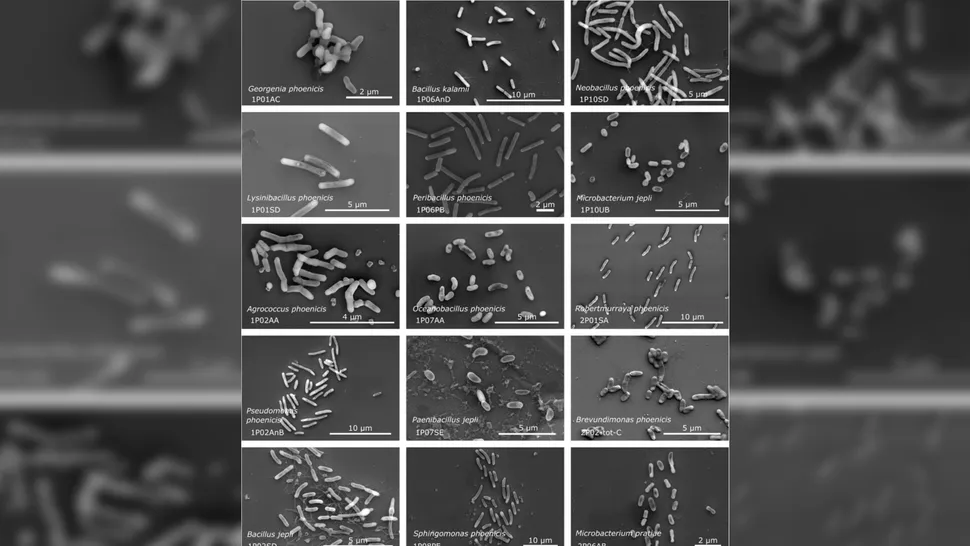
However, despite all these precautions, researchers recently re-analyzed samples taken from the clean room at Kennedy Space Center that hosted the Phoenix lander, launched to Mars in 2007. The result? Twenty-six new species of extremophilic bacteria (organisms capable of surviving in extreme conditions) were identified.
It is no coincidence that these extremophiles survived in the clean room. These bacteria possess extraordinary abilities to withstand harsh conditions, enabling them to survive rigorous sterilization, filtration, and disinfection processes.
Survivors of the Impossible
These bacteria were not only unknown to science; they appear to be built for hellish environments. Some carry genes associated with DNA repair, radiation resistance, detoxification of harmful substances, and even the ability to survive in the vacuum of space.
In other words, these microbes could — at least theoretically — survive a trip to Mars. This raises an uncomfortable question: what if some of them traveled with Phoenix?
Fortunately, the authors of the study are reassuring: there is no evidence that the lander was contaminated or that Mars has been exposed to these microbes. However, this discovery shows that, even under strict conditions, life finds a way.
A Risk for the Red Planet… and for Earth?
The study, published on May 12 in the journal Microbiome, raises crucial issues. “Our goal was to better understand the risk of transferring extremophiles during space missions,” explains Alexandre Rosado, microbiologist and co-author of the study. The research aims to prevent any form of cross-contamination, whether from Earth to Mars or vice versa.
It is a fundamental principle of space exploration: do not pollute other worlds and do not bring back potential extraterrestrial microorganisms to Earth. Yet the discovery of such resilient species in a room that is supposed to be sterile necessitates a reconsideration of certain protocols.
Valuable Allies for Science
Ironically, these microbes that concern astrobiologists may also become valuable allies. Their exceptional resistance to hostile environments makes them ideal candidates for applications in medicine, biotechnology, and even space colonization.
Some of them produce biofilms, protective structures useful for food preservation or the creation of self-repairing materials. Even more significantly, understanding how these bacteria survive in conditions similar to those on Mars could help us identify what extraterrestrial life might look like.
Lessons for Future Missions
This discovery comes at a crucial time. NASA and other space agencies are preparing to launch new Mars missions, some of which will return Martian soil samples to Earth. Therefore, mastering sterilization and quarantine protocols is essential, both for protecting Mars… and our own planet.
In the meantime, this study reminds us of an essential truth: even in the most hostile environments, life exists. It is no coincidence that some scientists dream today of transforming clean rooms into true laboratories for exploring extreme life.
General News – 2