
## The Mayan Train: A Promising Project Falling Short
The Mayan Train, an ambitious infrastructure project initiated under former President Andrés Manuel López Obrador, started with grand promises of economic growth, job creation, and social progress. However, nearly two years post-inauguration, the reality is starkly different. Both locals and tourists seem largely uninterested, with recent data revealing that the train is only accommodating 5% of the expected demand.
### What is the Mayan Train?
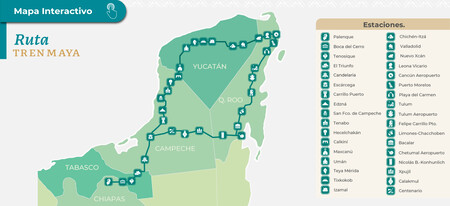
The Mayan Train is a railway network stretching over 1,500 kilometers, connecting the states of Chiapas, Tabasco, Campeche, Yucatán, and Quintana Roo, which house some of Mexico’s poorest areas. The project was envisioned not just as a means of transportation but as a vehicle for uplifting these regions through tourism and commercial activity.
### Current Status and Operations
After a controversial construction phase that inflated the initial budget significantly, the Mayan Train became operational almost two years ago. Although it has launched various routes, including the Campeche to Cancún section, ridership has not met expectations. The government recently launched promotional tourist packages to boost interest, particularly during the holiday season, but uptake has been minimal.
### Why Are Ridership Numbers Low?
The low ridership figures raise an important question: why is the Mayan Train struggling? One major factor is inadequate marketing and awareness. Many tourists arriving in the Yucatán Peninsula are unaware of the train’s existence or its benefits. Additionally, the train competes against ingrained transportation habits, such as buses and taxis, which are often more direct and economical for locals.
For residents, the appeal of the Mayan Train is further diminished by the inconvenient location of its stations. Many locals find that the additional transportation costs to reach these stations make train travel more expensive than alternatives. A perception exists that taking a bus is not only direct but also cheaper.
### Challenges in Attracting Tourists
Despite government efforts to integrate the Mayan Train into tourist itineraries, visitors often depend more on travel agencies that prioritize buses and cars over the railway option. While the train is described as comfortable and safe, the perceived advantages over traditional forms of transport are limited.
### Societal and Economic Implications
Beyond these logistical issues, the Mayan Train’s impact on local communities has sparked controversy. Critics highlight environmental concerns and question the actual benefits to the impoverished populations it was meant to uplift. Proponents argue that the train could stimulate local economies and create jobs, yet this potential has not materialized as expected.
### Government’s Position
Officially, the government reports that ridership has been growing, recently announcing that the Mayan Train has transported over 1.5 million passengers since its launch. However, local media suggest that foreign tourists contribute only a small fraction—about 6%—of total ridership, calling into question the effectiveness of the government’s claims.
### Conclusion: Future of the Mayan Train
In summary, the Mayan Train’s lofty promises have yet to materialize into tangible benefits for either locals or tourists. While it has the potential to positively affect the socio-economic landscape of Mexico’s southeast, significant challenges remain to be addressed. Whether the government can turn the tide and make the project a success remains to be seen.