
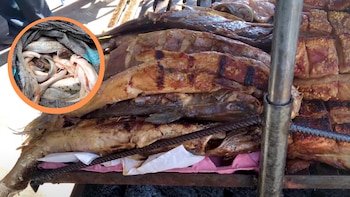
Mercury Contamination: A Profound Impact on Amazonian Communities
For years , markets in the region of Madre de Dios have faced a severe scarcity of one of their most widely consumed fish: mota punteada . Scientific investigations revealed that the fish contained alarming levels of mercury , a toxic element linked to illegal mining activities in the region’s rivers. This discovery was a source of great concern for the local population, particularly for pregnant women and indigenous children , who are particularly susceptible to the detrimental effects of mercury. The ramifications of consuming contaminated food have left lasting marks on the health of many families in the area.
The scientific warning prompted an immediate ban on the sale of mota punteada. The fish disappeared from regional markets, while researchers scrambled to find viable alternatives to reintroduce the species into local diets without compromising consumer safety. The challenge was immense; the mercury accumulated in these fish results from their environment, not an inherent trait. Thus, developing a means to cultivate them safely was paramount.
Three Years of Research Yield Promising Results
After three years of extensive studies, adjustments, and trials in fish farms , results finally began to take shape. The Institute of the Amazonian Peru (IIAP) announced a breakthrough: they were able to produce mota punteada fish free from any mercury contamination, making them safe for human consumption again. This revelation marks a significant step forward not only in terms of food safety but also for the cultural identity and economic recuperation of communities historically reliant on this fish.
“The muscle of the fish now presents very low mercury levels, and in some cases, none ,” confirmed Jorge Babilonia, a biologist at IIAP. “This allows us to offer a technological package that guarantees a safe product, specifically in the case of mota punteada.”
According to a spokesperson from IIAP, the contamination directly affected vulnerable demographics, notably pregnant women and indigenous children . “Mercury attacks the nervous system, and its effects can be irreversible ,” they stated.
A Unique Approach to Cultivation
The issue of mercury contamination is not isolated to one species or region. However, mota punteada has emerged as an emblem of the crisis due to its massive presence in the regional diet . The primary objective was to extract the species from its natural habitat while preserving its reproductive and nutritional processes. Scientists found an innovative solution in their laboratories, applying a hormonal technique utilizing an extract from carp pituitary glands. This substance stimulates controlled reproduction.
Injecting this extract into existing populations allowed researchers to obtain eggs and sperm . Combining these resulted in the production of larvae and fry. At this critical stage, their diet consisted of artemia , tiny microscopic crustaceans. However, scientists subsequently trained the fish to accept balanced diets created in laboratories, ensuring their feeding practices wouldn’t expose them to mercury contamination again.
“This training lasted between 20 and 30 days. We successfully transitioned the fry from a natural diet to a controlled one,” explained the IIAP team. “This guarantees that the species can return to the market without health risks for consumers.”
Future Plans and Implications
The next phase involves implementing these techniques in Amazonian territories. The IIAP plans to introduce mercury-free mota punteada into fish farms located in the native community of Belgium, near the border of Peru and Brazil. This community will be the first to participate in the restocking project.
“The goal is to recover mota punteada for human consumption in our Amazon,” the researchers stated. “We are talking about returning a valuable resource to tables without the dangers involved with traditional fishing methods.”
This model of controlled reproduction and supervised feeding could potentially be replicated with other species affected by mining contamination . For now, the return of mota punteada symbolizes a possibility: that applied science can help reverse , at least in part, the damage wrought by illegal activities in the rivers of the region.