
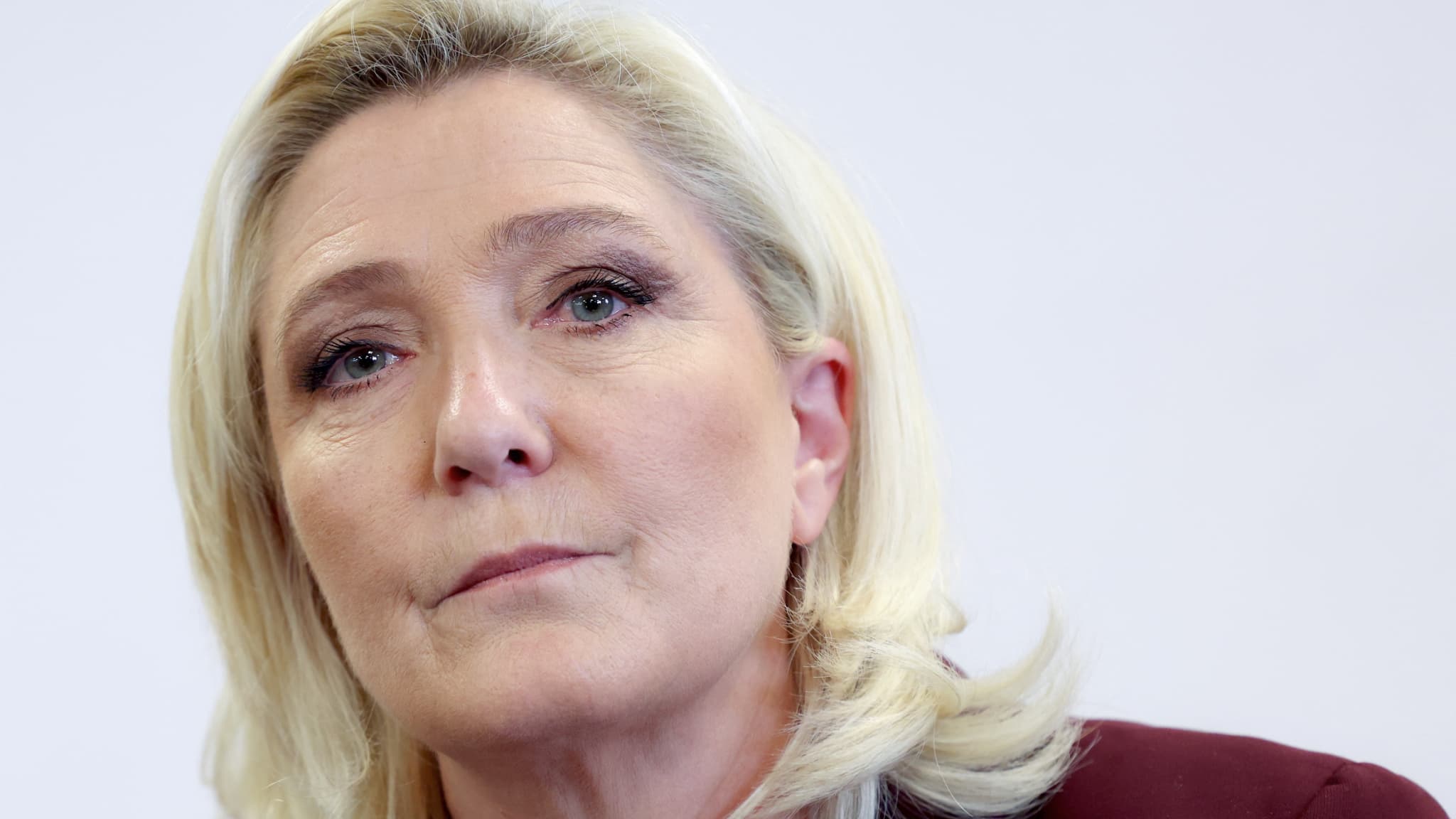
Marine Le Pen, the leader of the far-right party in France’s National Assembly, recently issued a stinging critique of Interior Minister Bruno Retailleau, blaming him for the deterioration of public safety in the wake of significant unrest following Paris Saint-Germain’s (PSG) victory in the Champions League. In an interview published on June 7, Le Pen condemned Retailleau for failing to mitigate violence and insecurity , stating that there can be “no excuse” for what she perceives as his ineffective governance.
In the wake of recent events, where images of chaos erupted after the PSG celebration went viral, Le Pen stated her concerns publicly. “Certain people praise Mr. Retailleau simply because he is on the right—just as they did yesterday with Mr. Barnier,” she said. “It does not matter if he leads a lax policy; he is given excuses. I give him none.” According to Le Pen, the current state of the country—characterized by impunity , overwhelming immigration , and heightened insecurity—*demands accountability and action*, which she claims Retailleau has failed to provide.
“There Are Only Words”
Le Pen went further in her criticism, expressing that the government has not taken adequate steps to counteract crime and violence. “We could have expected a clear direction, significant actions. There are only words,” she lamented. “Words do not stop the vandals or criminals. Unless we take action—arresting and expelling those who violate our laws—these issues will persist.” This stark assessment underscores a frustration with what she views as ineffective rhetoric from the government.
Interestingly, despite her criticisms, Retailleau seems to maintain a level of popularity among some voters. In a recent Elabe poll for Les Echos, he was ranked fourth with 33% of respondents holding a positive view of him—just trailing behind Le Pen, who received 34%, and her protégé, Jordan Bardella, who garnered 35%. Yet, Le Pen maintains a dismissive attitude towards Retailleau’s popularity, asserting, “I have too much confidence in the intelligence of the French people to fear him.” This implies that, at least in her view, substance will ultimately outweigh superficial endorsements.
Le Pen Criticizes Violence After PSG’s Victory
Returning to the broader context of societal unrest, Le Pen noted that “the French people see that his results do not meet expectations, and that his decisions fail to address the urgent situation.” She highlighted the prevailing sense of fear among citizens, which she argues is justified given that both insecurity and violence have been increasing *exponentially*, much like unchecked immigration. Her remarks during this period of turmoil showcase her intent to position herself as a champion of public safety.
Moreover, Le Pen hasn’t shied away from holding the government accountable for the fallout from the PSG celebrations, which were marred by violence. “Either there is political responsibility, or no one is responsible for anything. Given the severity of these events, there are two paths: either the government acted adequately— which it must prove—or it failed to do so, and in that case, it is clearly responsible for this debacle,” Le Pen stated emphatically.
This ongoing exchange between Le Pen and Retailleau paints a vivid picture of the current political climate in France, a landscape marked by deep-seated fears over safety and the challenges of governing amidst societal unrest. As tensions rise and the public becomes more aware of the issues at hand, it remains to be seen how these dynamics will impact political fortunes as the next election approaches.