
The Challenge of Breaking Prejudices
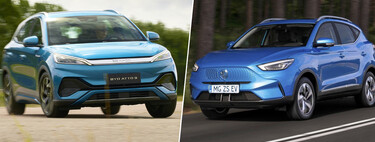
As Chinese car manufacturers enter the European market, perceptions about “cheap” vehicles might hinder their progress. While the term “cheap” is often associated with lower price points, it’s critical to recognize that many of these brands offer substantial value even in the €50,000 range. However, existing biases present a complicated landscape.
Combustion Engines vs. Electric Models
For the time being, most sales from Chinese brands are anticipated to come from combustion engine models. The ability to offer competitively priced vehicles under the constraints imposed by EU tariffs makes them attractive in regions like Spain, where the market values budget-friendly low-end options.
On the flip side, the electric vehicle (EV) segment poses challenges. Here, tariffs play a significant role in pricing, and with European manufacturers ramping up their electrification efforts, the competition is steeper. Higher-priced vehicles tend to be less risky for buyers, leading them to favor established brands.
Introducing Zeekr
Zeekr emerges in this challenging environment, not to be confused with other Chinese brands like BYD or Omoda, which often fill their portfolios with combustion models. Zeekr is banking on its premium segment approach, as articulated by Lothar Schupet, the CEO of Zeekr Europe: “We make exclusivity accessible.”
A Promising Lineup
The brand has launched in Spain at an opportune time, as the company has already secured presence in advanced EV markets like the Nordics. Although Zeekr’s range currently features four cars—one of which is set to arrive later—this strategy points to a gradual yet assured entry into less-established markets.
Among the offerings, the Zeekr X emerges as an interesting compact model. With a starting price of €37,137, it offers impressive specs: a 49 kWh battery and 272 HP. The higher-end variants increase the price to €46,242 with up to 496 HP. This model promises a solid driving experience, combining agility with an attractive aesthetic that sets it apart from other vehicles in the same class.
The Bet on Premium Electric Vehicles
Zeekr is leveraging its connection to the Geely Group, a conglomerate with extensive automotive experience and ownership of brands like Volvo and Polestar. While Zeekr set ambitious targets for registrations—600 by year-end, aiming for 3,000 by 2028—its journey will be marked by the need to counteract prejudices regarding Chinese brands.
Technological Edge and Future Prospects
The technological prowess of Zeekr is evident, featuring advanced automation systems and strong safety credentials with five Euro NCAP stars. Each model is built on a modular platform exclusively for electric vehicles, ensuring compatibility across its range. The company presents a roadmap that emphasizes sustained growth rather than immediate disruption, as it hopes to establish itself as a premium electric alternative to traditional German brands.
Conclusion: The Road Ahead
The big question for Zeekr is whether the Spanish market is ready to embrace a premium electric brand that dares to challenge established norms. While initial impressions suggest a credible offering, the steep price point means that Zeekr must work rigorously to alter existing perceptions and establish trust among new consumers. Navigating these prejudices will be Zeekr’s greatest challenge as it carves its niche within the evolving automotive landscape.