
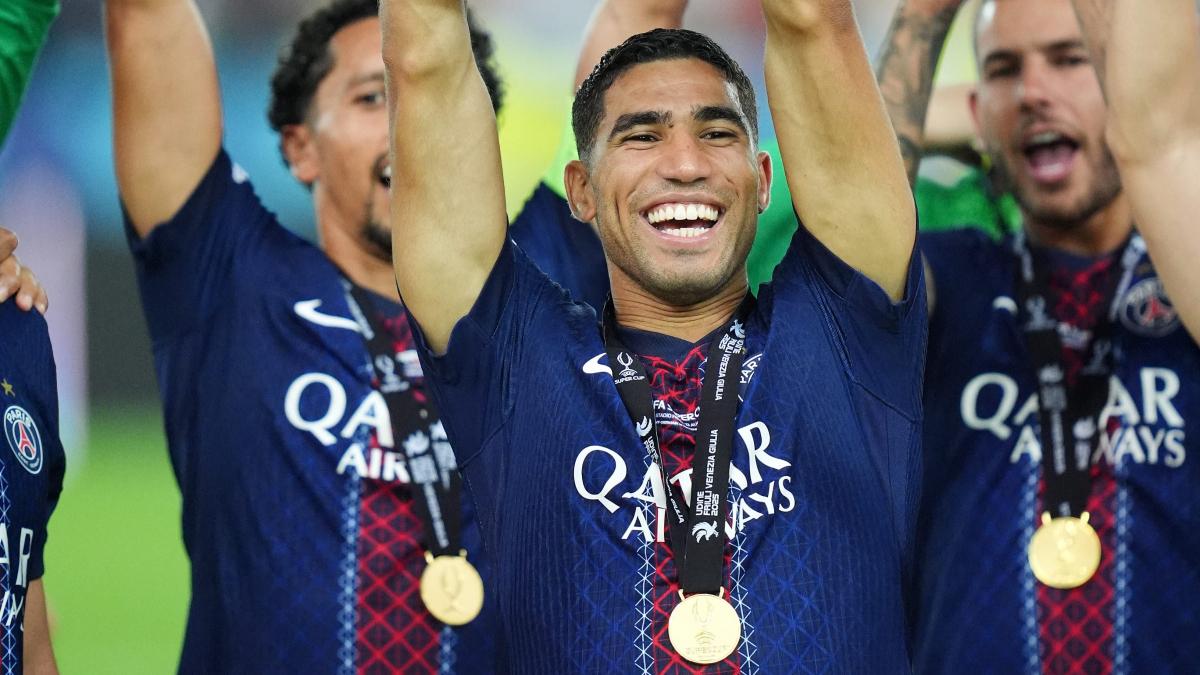
Luis Enrique Dodges Questions Regarding Achraf Hakimi’s Legal Troubles
Luis Enrique, the head coach of Paris Saint-Germain (PSG), recently faced the media at a press conference before the highly anticipated match against Marseille this Sunday evening. One of the most pressing issues raised was the current legal situation of Achraf Hakimi, who has been indicted by the Nanterre prosecutor’s office regarding serious allegations, including a potential rape trial. The sensitive nature of this topic has put both Hakimi and PSG in the spotlight, leading to critical questions surrounding the player’s role in the team.
As the queries regarding Hakimi’s situation grew, journalists sought clarity on why he has retained the title of vice-captain, especially in light of his ongoing legal issues. However, Luis Enrique opted to evade the subject. In a seemingly light-hearted manner, he responded, “Ok, I’m leaving,” while showcasing a smile that contrasted sharply with the gravity of the topic at hand.
Enrique’s evasiveness raises concerns about transparency in the club, particularly when it involves serious allegations against one of its players. He elaborated minimally, touching upon the topic of team captains in general: “I will answer as usual. When I am told about the captains, I have never selected the captains. It is the players who must decide who represents the team.” This statement pointedly sidestepped the core issue at hand—Hakimi’s allegations—and instead seemed to deflect to a broader team dynamic.
A Closer Look at Hakimi’s Situation
The circumstances surrounding Achraf Hakimi paint a troubling picture. The Moroccan international’s indictment poses significant risks, not only for his career but also for the club’s reputation. As he continues to participate in matches and hold leadership positions within PSG, questions abound regarding the ethics of retaining such a role amid serious allegations.
Hakimi’s implications in this legal battle contrast sharply with his accomplishments on the field. He has been a crucial player for PSG since his signing, known for his remarkable speed, unparalleled defensive capabilities, and ability to drive the attack from the backline. However, now his future seems clouded by legal uncertainties that could severely impact both his personal and professional life.
The broader implications for PSG and its management cannot be understated. Clubs often face scrutiny over their treatment of players facing serious allegations, and the handling of Hakimi’s role could set a precedent for how similar situations are approached in future.
PSG’s Leadership Dynamics
Luis Enrique’s comments regarding team captains reveal an interesting philosophical approach to leadership within PSG. By suggesting that the players themselves have a hand in choosing their leaders, he emphasizes a communal aspect of team dynamics. However, this opens a Pandora’s box: how can players make informed decisions about their leaders when those leaders may be involved in controversial situations?
Marquinhos, the first captain of PSG, represents a stabilizing force amidst this uncertainty. His leadership qualities have been well established, and he tends to balance the chaotic atmosphere that often surrounds high-profile clubs like PSG. Yet, the issue of Hakimi complicates the narrative. It raises questions about what responsibilities lie with the players themselves and what communication is expected from the club’s management regarding serious allegations.
At the heart of it all is the question of accountability. Clubs have a responsibility to foster a safe and respectful environment for their players and fans. How PSG navigates this situation—and the broader debate surrounding accountability in sports—could serve as a model or cautionary tale for other clubs across the globe.
The Need for Transparency
As the PSG faithful prepare for an exciting match against Marseille this upcoming Sunday, the tension remains not only on the pitch but also in the minds of fans and stakeholders. Transparency in how the club handles such sensitive issues is paramount, especially when the implications touch upon matters of justice and integrity.
With the eyes of the football world on Achraf Hakimi and PSG, many will be watching to see how this situation unfolds in the coming weeks. The decisions made now will not only affect the future of the player involved but could also alter the trajectory of one of the most prominent football clubs in the world. Whether Luis Enrique’s evasive attitude will serve to shield the club or create further pitfalls remains to be seen. The outcome of this high-stakes narrative is not just a matter of sports, but of ethics, accountability, and the responsibility of those in power.
In wrapping up, it is imperative that PSG addresses this situation transparently to uphold the integrity of their match, their players, and the sport itself. The challenges ahead demand deliberation and conscientious action, ensuring the well-being of all involved.