
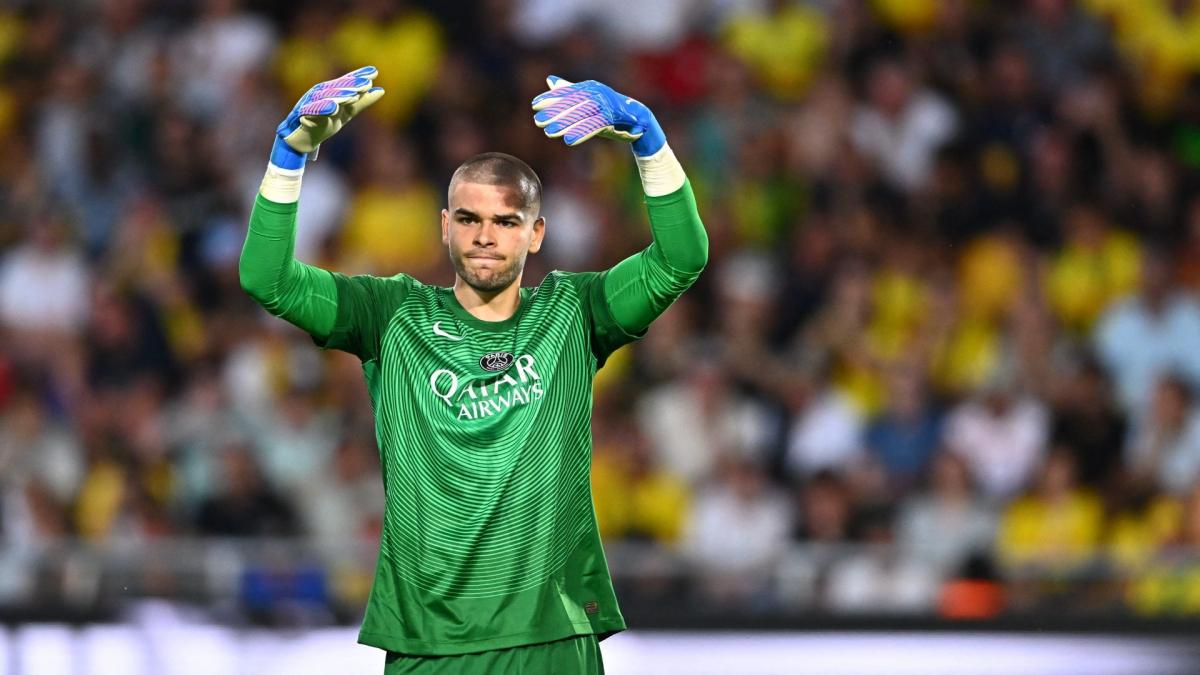
## Controversy Surrounding Lucas Chevalier
Lucas Chevalier, a 24-year-old goalkeeper for Paris Saint-Germain (PSG), faced significant backlash following a controversial incident during a recent match against Olympique Lyonnais. While PSG managed to secure a 3-2 victory, the spotlight shifted away from the game itself and onto Chevalier’s off-field actions.
### An Accidental Like Sparks Outrage
The controversy erupted when footage surfaced showing Chevalier “liking” a publication on Instagram that was associated with the far-right political party, National Rally. This incident quickly went viral on social media platforms, drawing a mixture of outrage and ridicule. Given the sensitivity surrounding racial and political issues in football, particularly in France, this seemingly innocuous action led to a significant online uproar.
### Chevalier’s Response
Faced with growing criticism, Chevalier took to his Instagram account to address the situation. In a brief story, he expressed surprise at the level of criticism he received regarding his actions. Reports indicate that he reacted to the situation by asserting he had not fully realized the implications of his “like.” The player described the incident as an “accidental click,” downplaying the severity of his mistake.
### PSG Management’s Stance
PSG management responded to the incident by confirming they had a conversation with Chevalier after the match. They clarified that the young goalkeeper was taken aback by the media coverage and social media frenzy surrounding his action. According to a statement released by the club, Chevalier was not aware of the political connotations tied to the post he interacted with, which further emphasizes the societal complexities surrounding digital interactions today.
### The Implications of Social Media in Sports
This incident highlights a crucial aspect of modern sports culture—the powerful influence of social media. Athletes today are under immense scrutiny, not only for their performance on the field but also for their digital interactions. One unintentional act can lead to viral outrage, as seen in Chevalier’s case. It raises questions about the responsibility athletes have regarding their online presence and the potential repercussions of their actions, intentional or not.
### A Broader Conversation on Racism and Politics
In a country like France, where discussions around race and politics are particularly charged, Chevalier’s situation serves as a case study in the intersection of sports, identity, and social issues. The rapid dissemination of information online can create a maelstrom of opinions, often without complete context. It emphasizes the necessity for athletes and public figures to navigate these complexities with care, as every action—no matter how minor—can be interpreted through various lenses.
### Conclusion
Lucas Chevalier’s experience is a cautionary tale for athletes navigating the digital landscape. His inadvertent like on a politically charged post has opened up discussions that go beyond sports—challenging individuals to consider the ramifications of their social media usage both personally and professionally. As the lines blur between public life and personal opinion in the age of social media, discussions on accountability and responsibility will continue to shape the dialogue in sports culture.