
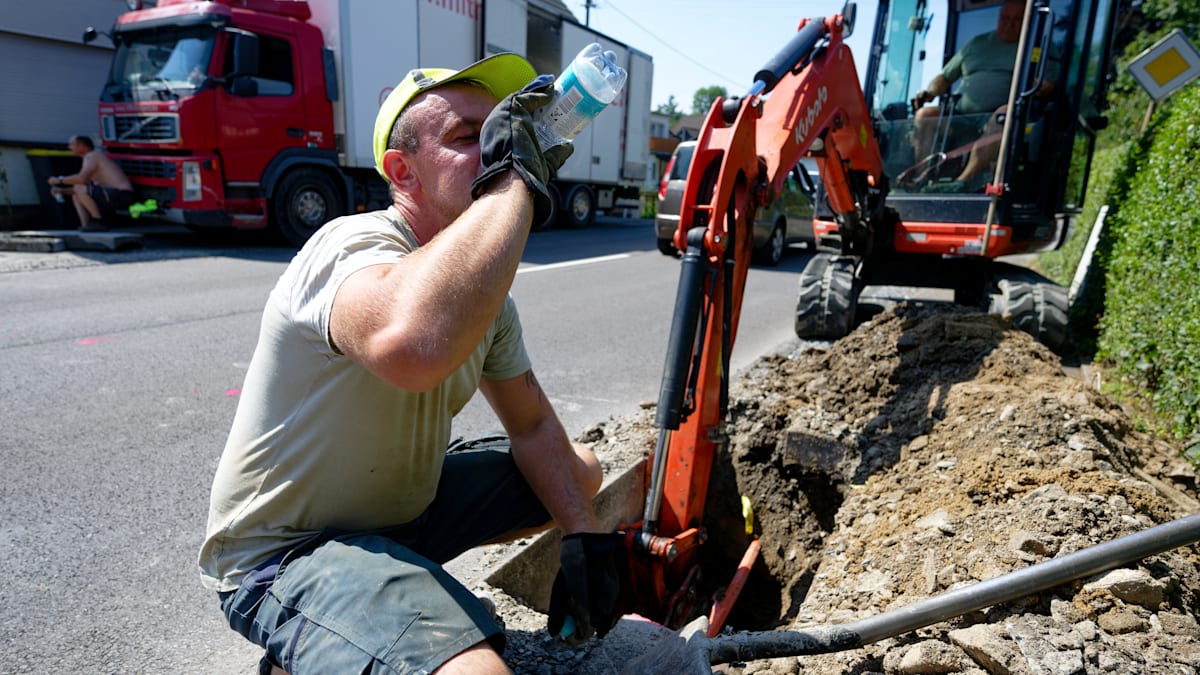
As temperatures soar to 30 degrees Celsius, the political discourse surrounding workplace practices intensifies. The Left Party advocates for “heat-free” policies at work, which face skepticism from the Union and criticism from the AfD. Meanwhile, the Greens join in support, and the Health Ministry warns about the health impacts of extreme summer heat.
Recent proposals from the Left Party advocate for heat-free policies not only in schools but also in workplaces. They suggest that when temperatures reach 26 degrees Celsius , workers should be allowed to skip 25% of their working hours, and at 30 degrees , half of their daily work hours should be eliminated.
Furthermore, employees would have a right to water supply and sun protection in the workplace. Employers would be obliged to install fans , and cities would provide free dispensers of water and sunscreen at public locations like beaches. These measures have been outlined by Left Party leader Jan van Aken in a document titled “Heat Protection is Workplace Protection – Act Now,” as reported by Redaktionsnetzwerk Deutschland .
Van Aken emphasized that the climate crisis is fundamentally a social issue . “Those toiling under scorching sun or in overheated offices pay a heavy price with their health,” he stated. “No one can work effectively or concentratedly in an office at 30 degrees or higher.” This discomfort often leads to serious health complications, as it severely affects both physical well-being and productivity.
According to the Federal Statistical Office , there were over 1,500 hospital treatments annually for health-related issues caused by heat or sun exposure, recorded between 2002 and 2022 .
Recently, the Federal Ministry of Health under Nina Warken (CDU) released a measures catalog for sports clubs addressing the exact same concerns. Recommendations include providing sunscreen , cool water, and shade, while advising against the sale of alcohol and barbecues in hot conditions. “Whether outdoor or indoor sports, every discipline will face the impacts of climate change,” noted the 13-page heat protection plan .
However, the Left’s workplace proposals are met with disapproval from the Union, which claims that Germany already possesses a robust occupational health and safety framework capable of handling high temperatures. Marc Biadacz (CDU), the Union’s spokesperson on labor market and social policy, argues that the current laws adequately ensure health protection for employees through regulations surrounding sun protection and ventilation. He describes the Left’s proposal as “ unrealistic and economically unviable,” particularly for critical sectors such as the craft industry , healthcare , or public service .
Nonetheless, some union members acknowledge the need for water dispensers in workplaces, given that nearly one-third of Germans fail to drink enough fluids in their daily lives, especially during heatwaves.
Prioritizing Health or Personal Choice?
CDU’s Simone Borchardt noted that emphasizing hydration is vital amidst rising hospital stays due to heat-related ailments. “It’s essential to increase public health literacy and communal support during challenging temperatures ,” she remarked.
Meanwhile, the AfD firmly rejects the Left’s initiatives, arguing that the state should not assume a “nanny” role for citizens. Martin Sichert , the AfD’s health policy spokesperson, maintains that businesses should be trusted to implement measures that benefit their employees rather than being dictated by government mandates. “The Left merely echoes populist rhetoric, neglecting real worker issues such as fair wages and retirement reform,” Sichert pointed out.
In contrast, the Greens advocate for “adapted working time regulations,” highlighting the grave risks faced by workers in non-climate-controlled environments. Andreas Audretsch , deputy head of the Green party, acknowledges increasing health risks, particularly skin cancer for those laboring in the sun. “Heat in the workplace is a serious health hazard ,” he asserted, calling for tailored heat protection plans unique to each occupation.
Given the increasing occurrence of extreme heat days due to climate change, Audretsch believes addressing these issues should be a priority for both federal and local governments. “We must develop concrete and enforceable heat protection measures that include shaded areas, decreasing concrete surfaces, increasing greenery, and ensuring good access to drinking water,” he concluded.
Support for van Aken ’s proposal comes from within his party. Fabian Fahl , a climate policy spokesperson in the Left faction, stresses that many individuals in labor-intensive jobs suffer under hazardous heat conditions, which necessitates policy improvements . “Shorter working hours during extreme heat are not a luxury but a fundamental aspect of workplace safety and employee welfare,” Fahl insisted.
Given the swift increase in temperatures linked to climate change, it is essential to address protective measures for the more vulnerable members of society, including the elderly, children, and the homeless.
Ultimately, the dialogue surrounding heat policies in the workplace highlights the different perspectives and priorities of various political factions. It calls for a balance between personal freedom and public health, pressing the need for effective solutions that anticipate the challenges posed by climate change.