

The Rising Political Discourse in Colombia: A Clash Between Congress and the Presidency
The recent installation of the Congress of the Republic in Colombia on July 20 has unveiled a robust opposition discourse led by representative Lina María Garrido from the political faction of Radical Change. This momentous event saw Congress members engage in *heated discussions* with government officials, particularly President Gustavo Petro .
During her speech, Garrido outlined a staunch critique of President Petro’s management over the initial years of his term. She emphasized her readiness to present data and figures to support her claims and expressed her willingness to face legal repercussions stemming from accusations of slander made by Interior Minister Armando Benedetti .
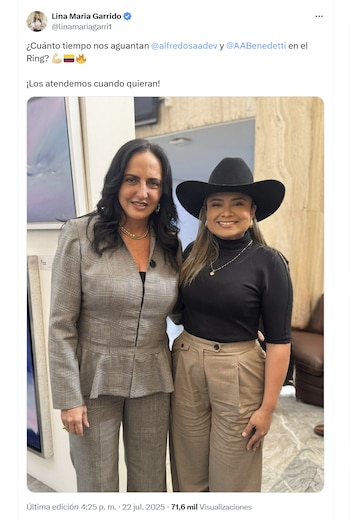
Indicative of her defiance, she took to social media, sharing a photo with María Fernanda Cabal , senator of the Democratic Center who has aspirations for the presidency. In her post, she provocatively asked, “How long do we endure @alfredosaadev and @aabedetti in the ring? We attend them when they want!” igniting further political tension.
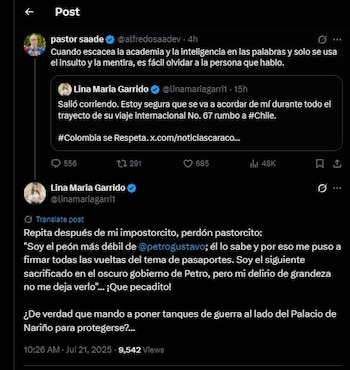
After her opposition speech , Garrido pointed out that President Petro had exited Congress prematurely, ignoring vital counterarguments presented by the opposition. She speculated that the President’s departure was a result of the criticisms he faced regarding his administration. “He ran. I am sure that he is going to remember me during the whole journey of his international trip No. 67 Rumbo to #chile,” she quipped on X, highlighting the atmosphere of accountability that her party seeks to promote.
The exchange escalated as Alfredo Saade, the Chief of Staff, suggested that Garrido lacked intelligence and proper academic training. He labeled her arguments as false, insinuating she would be easily forgotten amidst political discourse.

While the government officials staunchly defended the president’s portrayal of advancements across sectors such as agriculture, health, economy, education, and security , many congress members and analysts contested these claims. They asserted that the president’s numbers were misleading, depicting a deteriorating country .
Garrido’s counterarguments included a pointed critique directed at Saade, suggesting that he was merely a pawn in Petro’s administration: “I am the next sacrificed in Petro’s dark government, but my delirium of greatness does not let me see it.” This statement underscores the sense of turmoil that exists within the government’s ranks.
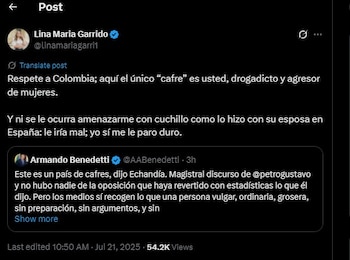
The tensions escalated further when Minister Benedetti responded directly to Garrido, referring to her past struggles with drug addiction and her rehabilitation process . He attempted to undermine her credibility by linking her issues to a gender violence complaint made by his wife. In response, Garrido fiercely rebuked him, emphasizing her discontent and asserting, “Respect Colombia; here the only ‘Cafre’ is you, drug addict and women’s aggressor.” This exchange illustrates a raw, dynamic discourse within Colombian politics.
As this political drama unfolds, it is clear that the Columbian Congress finds itself at a critical juncture, marked by profound disagreements and calls for accountability among its members. The ongoing dialogues reflect the contentious atmosphere that persists as both sides stand firm on their convictions, igniting a potential for significant change within the landscape of Colombian politics.