
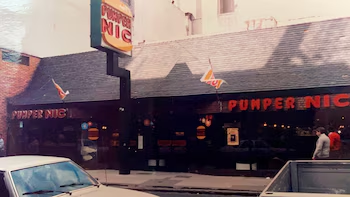
The Rise and Fall of Pumper Nic: Argentina’s First Fast Food Chain
Introduction to Pumper Nic
Founded in 1974 by Alfredo Lowenstein, Pumper Nic quickly became a landmark in the Argentine fast food landscape. The chain initially flourished, boasting over twenty franchises across Argentina, Brazil, and Uruguay. It was heralded as the quintessential fast food experience during the 1980s and 90s, effectively carving out its niche in a burgeoning industry.
The Economic Landscape of the 90s
During the late 1980s and early 90s, Argentina was undergoing significant economic transformations, largely driven by the policies of President Carlos Menem. This era saw massive privatization efforts and the entrance of American fast food chains, which fundamentally altered the competitive environment. As highlighted by Javier Ledesma in a recent interview, Pumper Nic faced fierce competition from these newcomers, leading to shifting consumer preferences.
Legal Troubles and Brand Overhaul
One of the pivotal moments in Pumper Nic’s history was a lawsuit concerning its logo. After allegedly imitating the branding of established American fast food giants, the chain was compelled to modify its logo and aesthetic drastically. Ledesma noted that the lawsuit forced Pumper Nic to implement significant changes, undermining its original brand identity.
Internal Challenges and Operational Failures
The decline of Pumper Nic can be attributed to multiple factors. Ledesma pointed out issues such as an uncontrollable franchise system, absence of operational manuals, and erratic quality between locations. Customers often found inconsistent product offerings and varying service levels across different franchises, which detracted from the overall experience.
Furthermore, as the Lowenstein family shifted their focus to real estate ventures in Miami, the interests that once propelled Pumper Nic’s success dwindled. Today, they manage a successful company in hotel renovations, leaving the fast food chain behind.
The Legacy of Immigration and Family Businesses
The conversation around Pumper Nic also brings attention to the role of immigration in shaping Argentina’s business landscape. Ledesma emphasized the contributions of immigrant families, noting how their drive to create sustainable businesses often translated to long-lasting brands. The stories of immigrant entrepreneurs reflect a collective desire to provide for future generations, contrasting sharply with the transient nature of larger corporate entities.
The Impact of Economic Crises
Arguably, one of the most notable aspects of Argentine capitalism is its cyclical relationship with economic crises. Ledesma noted that the stories of numerous businesses, including that of Pumper Nic, invariably lead to periods of turmoil and transformation. The Highs and lows of the economy often spell an end to even the most promising ventures, which is a common theme throughout Argentina’s commercial history.
Conclusion
Despite its eventual decline in the late 1990s, Pumper Nic remains a significant chapter in Argentina’s fast food history. Its rise and fall are emblematic of the country’s complex economic landscape and the challenges faced by family-owned enterprises. While Pumper Nic may no longer dominate the market, its legacy joins a rich tapestry of Argentine brands shaped by culture, immigration, and the relentless quest for entrepreneurial success.