
Lapland: A Fresh Take on Spanish Comedy
A Cultural Shock Wrapped in Humor
“Lapland” is a film that delves into the uncomfortable truths of contemporary Spanish life while delivering humor that resonates with authenticity. Directed by David Serrano, this adaptation of the play by Christina Clemente and Marc Angelet, offers a critical look at the middle-class experience in Spain. Instead of opting for the clichéd comedic tropes often seen in Spanish cinema, Serrano aims for a more nuanced narrative, reflecting the complexities of family dynamics and societal expectations.
Plot Overview
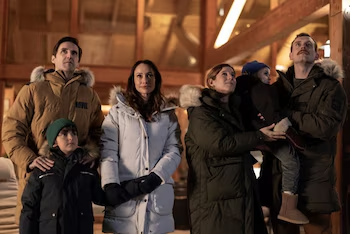
The film unravels the story of two sisters, who, after years apart, decide to celebrate Christmas together in Lapland with their respective families. This seemingly perfect plan quickly spirals into chaos, revealing long-buried family secrets and uncomfortable truths. As the night unfolds, what was intended as a festive reunion transforms into a battleground of hidden grievances and naïve illusions about family life.
The Adaptation Process
Serrano approached the film with a fresh perspective by intentionally avoiding the theatrical version during its original run. His goal was to create a “purer, more virgin” interpretation of the story. “I preferred not to approach preconceived ideas and work directly on the text that the authors themselves sent me,” he explained. This approach allowed him to maintain the universal themes present in the original work while crafting a unique cinematic style that reflects contemporary issues.
Tantalizing Humor in Realism
Serrano’s commitment to realistic humor is evident in his creative process. Recognizing the cultural context, he stated, “In Spain, we are used to more tacky comedies; I wanted to go for humor that is close to reality.” By toning down some extreme comedic elements from the play, he sought to create a smoother transition into the film’s more serious themes, covering controversial topics like parenting and traditions.
Casting Choices with Subtlety
The casting of Lapland plays a pivotal role in its authenticity. Serrano chose actors like Julián López, Natalia Verbeke, Ángela Cervantes, and Vebjørn Enger for their ability to portray believable characters who reflect the Spanish middle class. López expressed his excitement about this role, stating, “It’s the first time I’ve gotten really angry in movies,” highlighting the film’s emotional depth.
Navigating Cultural Contrasts
One of the film’s central elements is the contrast between Spanish and Finnish cultures. Serrano handled this complex interaction with caution, avoiding the stereotype of a bumbling Spaniard. The character portrayed by López is relatable and grounded, making it clear that the film seeks to avoid exaggerations often found in cross-cultural narratives.
The Magic of Childhood vs. Harsh Realities
At its core, Lapland raises significant questions about the preservation of childhood innocence. Serrano’s personal reflections reveal his belief in maintaining that joy for as long as possible. “I try to keep my son’s candidness and enthusiasm because the world is hard, and he will have time to face reality,” he noted. This sentiment runs throughout the film as it draws parallels between the loss of childhood magic and the evolving nature of adult life.
Reflection and Evolving Sensibilities
Serrano acknowledges that while his previous works like Football Days and On the Other Side of the Bed hold nostalgic value, societal sensitivities have shifted. He points out that certain comedic elements that were once acceptable may no longer resonate in today’s context. By remaining grounded and observant of everyday life, he commits to capturing the essence of contemporary realities through his films.
Conclusion
Lapland stands as a refreshing addition to the comedic landscape of Spanish cinema. By intertwining humor with relatable themes of family and identity, David Serrano effectively presents a narrative that is both entertaining and thought-provoking. As audiences embrace this film, it signals a cultural evolution in the Spanish film industry, one that prioritizes authenticity and meaningful storytelling over conventional stereotypes.