
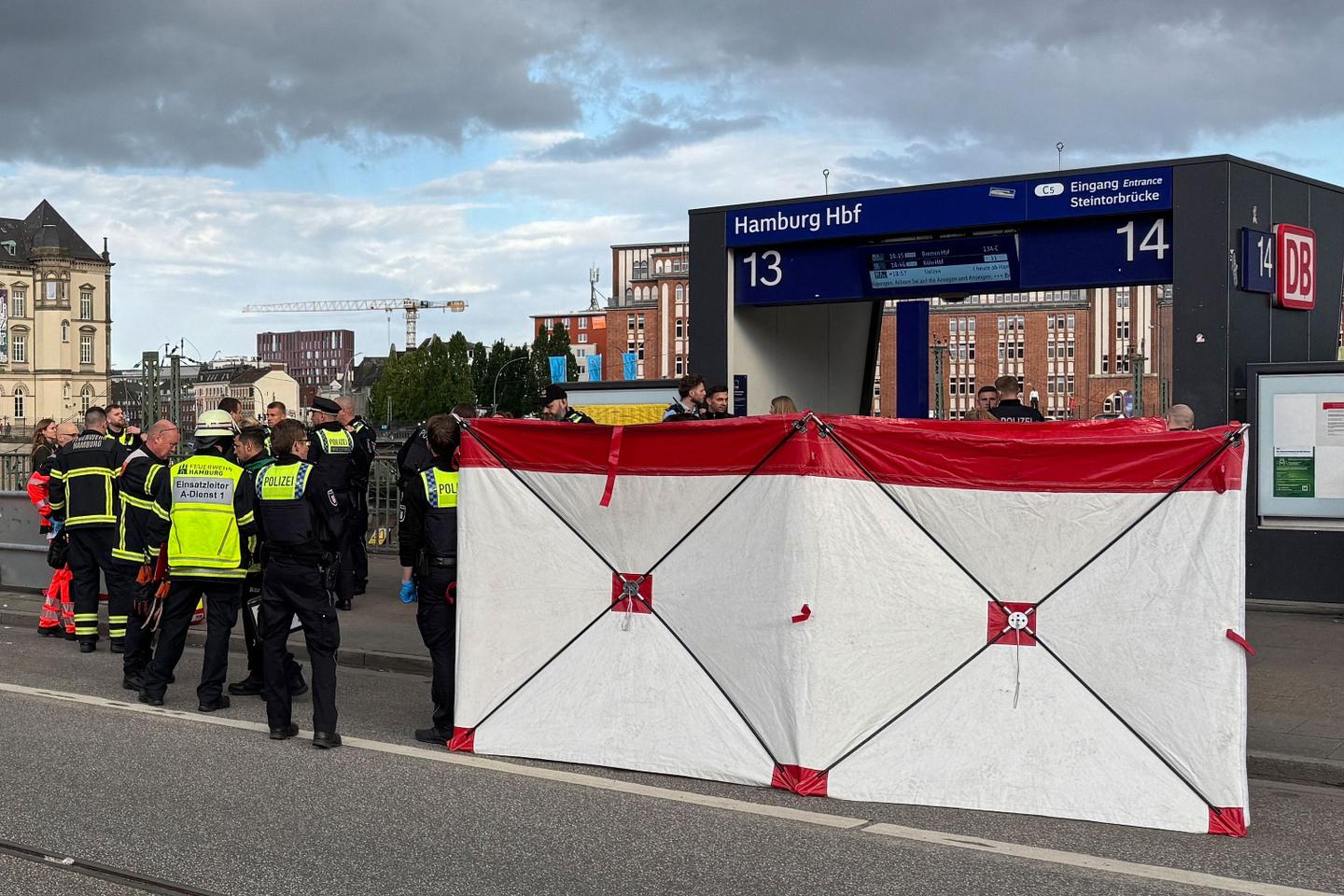
On May 23, 2025, a tragic incident unfolded in the central station of Hamburg , where at least 12 individuals were injured in a knife attack . This incident has raised significant concerns about public safety in Germany, especially after similar attacks have occurred recently.
According to reports from local police and firefighters, several of the injured individuals are in critical condition . The police spokesperson stated, “The attacker has severely injured multiple people with a knife in the central station.” This alarming situation has prompted an immediate emergency response .
The German daily newspaper Bild reported that out of the 12 injured, three are in critical condition , three have severe injuries , while the remaining six are only slightly hurt. The attack occurred on a platform of one of the busiest railway stations in Germany, highlighting the vulnerability of public spaces.
In response to the incident, a major rescue operation was launched. Images shared by various media outlets depicted first responders attending to the injured, and law enforcement officials cordoning off the area. The police emphasized they are conducting a thorough investigation into the circumstances surrounding the assault.
Germany has witnessed a disturbing uptick in violent attacks in recent months. These events have heightened public fear and brought security issues to the forefront of societal discussions. Just days prior to the Hamburg incident, there was another knife assault in western Germany, where four people were injured. The suspect, a 35-year-old Syrian , was arrested and suspected of engaging in an Islamist attack .
The ongoing fears regarding public safety are exacerbated by the historical context of similar attacks in urban areas, which often involve motives rooted in extremism and hate . Citizens and authorities alike are grappling with the implications of such threats and how best to ensure safety in public spaces .
As the investigation into the Hamburg attack continues, local officials have urged the community to remain vigilant and report any suspicious activity. The police are actively seeking to gather information that could lead to understanding the motivation behind the attack and whether the assailant acted alone or as part of a larger network.
Such incidents highlight the importance of creating resilient systems in urban regions, where safety cannot be taken for granted. Experts suggest that urban planning , community outreach programs, and educational campaigns could play pivotal roles in preventing violence .
The outpouring of support from the community in the aftermath of the attack exemplifies the resilience of the citizens of Hamburg. Support services are being made available for the victims and their families, offering psychological help and counseling as they navigate this challenging time.
While investigations proceed, it remains crucial for discussions surrounding public safety policies and practices to escalate. Community leaders, law enforcement, and policymakers must collaborate to address the root causes of violence and implement effective prevention strategies . The recent events remind society that the impact of violence extends beyond the immediate victims; it reverberates throughout the community and alters perceptions of security.
In conclusion, the Hamburg knife attack serves as a stark reminder of the persistent threats that many urban centers face. It is essential for citizens to remain engaged in public safety discussions and actively participate in building safer communities. As authorities work diligently to unravel the details of this attack, the hope remains that through cooperation and vigilance, society can foster an environment that discourages violence and promotes peace .