
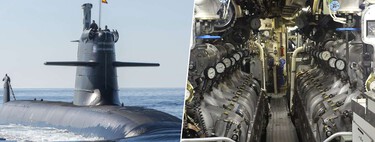
Spain’s S-80 Submarine Program: A Significant Milestone
Spain is undergoing a crucial phase in its military capabilities with the renewal of its submarine fleet. The recent ignition of the engines of the S-82 Narciso Monturiol marks a vital step toward delivering this next-generation submarine to the Navy. This development signals the transition from outdated vessels to more modern and capable platforms.
A Historic Milestone Achieved
On February 28, the S-82, the second submarine in the S-80 Plus series, successfully started its diesel engines for the first time. The Spanish Ministry of Defense heralded this event as a notable achievement, as it follows a series of significant milestones, including electrical ignition and battery onboarding. Each of these advancements inches the submarine closer to official commissioning and operational capacity.
Technical Specifications of the S-82
The S-82 Narciso Monturiol stretches about 80 meters long and boasts a diameter of around seven meters, allowing it to operate at depths with a submerged weight of approximately 3,000 tons. Its design accommodates over 30 crew members and enables underwater operations lasting up to three weeks, showcasing a remarkable balance of size and capability.
Armament Innovations
Equipped with advanced weaponry, the S-82 features a system co-developed by Navantia and Lockheed Martin. This allows for the launch of ground attack missiles, making it the only conventional submarine in the European Union with such capabilities. It can also deploy DM2A4 heavy torpedoes with an impressive range of up to 50 kilometers, enhancing its combat effectiveness.
Challenges Faced in the S-80 Program
The journey of the S-80 program has not been smooth. These submarines are the first of their kind designed in Spain, and since 2004, they have encountered numerous delays. Initially scheduled for delivery in the early 2010s, the first in the class, the S-81 Isaac Peral, faced significant setbacks, with costs ballooning from 1.8 billion euros to nearly 3.9 billion euros. The primary issue was weight, where the submarine experienced an overload of between 70 and 100 tons, compromising buoyancy and overall performance.
Looking Ahead: Future Developments
Completing critical tests for the S-82 serves as a prelude to its anticipated delivery later this year. Originally projected for the end of 2024, this timeline has shifted due to delays, necessitating a review of the aging S-71 submarine to maintain operational capabilities. Future plans involve the S-83 and S-84, scheduled for delivery in 2026 and 2028, featuring an upgraded BEST AIP system to improve endurance and immersion capabilities.
The Path to Operational Readiness
Following the ignition of the S-82 engines, further essential tests are planned, including assessments of its acoustic signature and diving capabilities. Such evaluations are crucial for its eventual deployment, ensuring that Spain can retire the S-71 while ushering in a robust and versatile new generation of submarines.
Photos | Ministry of Defense