
Exploring Noosignatures: Julia De Marines’ Innovative Approach
Are we looking for extraterrestrial life, or are we truly alone in the vast Universe? Many experts contend that it is presumptuous to think we are the only intelligent beings inhabiting the cosmos. However, as we search for alien intelligence, we may not be employing the best strategies. Traditionally, searches for extraterrestrial life focus on biosignatures—indicators of biological processes—and technosignatures, like radio signals from advanced technology. Astrobiologist Julia De Marines from the University of California, Berkeley, introduces a new concept that seeks to fill the gap: noosignatures.
The Concept of Noosignatures
Julia De Marines posits that the quest for extraterrestrial life may have overlooked significant indicators of intelligence in earlier developmental stages. If an advanced extraterrestrial civilization were to analyze Earth during the Stone Age, they might conclude that we have no intelligent life. This oversight highlights a common trap: assuming that all intelligent life progresses at the same technological pace. De Marines suggests we may need to shift our focus from seeking advanced technosignatures to recognizing early signs of cognitive activity.
Assembly Theory: A Key Insight
One of the core components in detecting noosignatures is Assembly Theory. This theory evaluates how complex objects are assembled from simpler components. A high assembly index might indicate intelligent activity rather than random natural processes. For instance, Stone Age tools demonstrate a certain level of cognitive skill that signifies early intelligence.
Measurable Traces of Intelligence
While we cannot look for stone axes through telescopes, other measurable activities can provide noosignatures. For example, agricultural practices leave detectable traces of nitrogen in the atmosphere. Similarly, the chemistry of waste from ancient food production, such as fermented products, can last for millennia. These measurable factors can indicate past intelligent activity on a planet.
Understanding the Unfamiliar
A significant aspect of searching for noosignatures is that understanding them isn’t a prerequisite for their detection. We might draw parallels to writing systems, such as those from the Indus Valley, which remain undeciphered. Nevertheless, we can discern their complexity and understand that an intelligent mind underpinned their creation.
Limitations and Challenges
However, the pursuit of noosignatures comes with challenges. One major limitation lies in their ephemeral nature; without timely measurement, these indicators can vanish. Furthermore, deciphering noosignatures can be complex. It’s also crucial to note that De Marines’ study is currently a preprint, awaiting further validation from independent researchers. Thus, her findings should be approached with a degree of skepticism.
The Broader Implications
Unfortunately, the search for intelligent extraterrestrial life, spearheaded by initiatives like SETI, has yielded limited results. As we contemplate the vastness of space and the possibilities it holds, adopting new methodologies, such as De Marines’ concept of noosignatures, could enhance our efforts. The universe is expansive and complex; understanding the signs of intelligence at various stages of development could prove crucial in our quest for extraterrestrial neighbors. The journey continues!
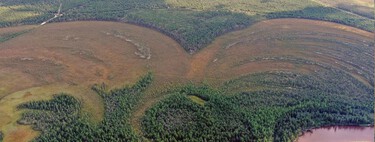
Image | Brooke Denevan (Unsplash)