
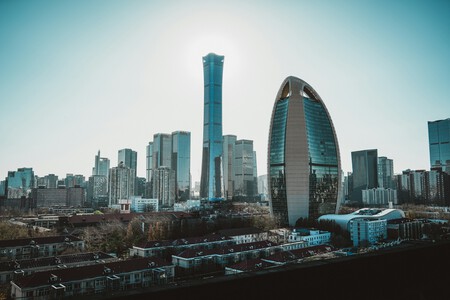
Jing-Jin-Ji: The Megacity You Haven’t Heard Of
In the landscape of global urbanization, cities are getting larger, and nowhere is this trend more pronounced than in Jing-Jin-Ji. This colossal conurbation is emerging in northern China, aspiring to dwarf many cities around the world. If projections hold true, this megalopolis may host between 110 and 130 million inhabitants, alongside a robust business ecosystem, all within a sprawling 200,000 km² area — double the size of Portugal.
A New Urban Paradigm: Understanding Jing-Jin-Ji
Jing-Jin-Ji isn’t a city born from the ground up but rather a reimagining of the existing cities of Beijing and Tianjin, coupled with Hebei province. This transformation aims to alleviate urban pressure while fostering an expansive industrial hub. With over 20 million residents, Beijing is already a bustling metropolis, with many residents commuting long distances for work and education. Such a demographic surge creates significant challenges concerning pollution and urban infrastructure.
Rethinking the Role of Beijing
Beijing’s capital status comes with unique challenges. The city’s vast workforce is strained by lengthy commutes, resulting in increasing pollution and inadequate public services. To tackle these issues, the Chinese government has implemented several measures, including population limits and a comprehensive reorganization of city structures. The vision includes transforming Beijing into part of a larger metropolitan network to foster a new economic powerhouse, akin to the successes seen in the Yangtze River Delta or the Guangzhou-Shenzhen area.
A Vision Realized: The Emergence of Jing-Jin-Ji
Officially endorsed a decade ago, the ambitious Jing-Jin-Ji project aims to integrate Beijing, Tianjin, and Hebei, enhancing regional coherence and distributing responsibilities. The National New Urbanization Plan from 2014 laid the groundwork for this megacity, advocating for numerous urban clusters, with Jing-Jin-Ji being the hallmark.
Infrastructure: The Backbone of the Megacity
Infrastructure development is pivotal for Jing-Jin-Ji’s success. Major investments have been earmarked for enhancing transport links, including roads and railways. By 2050, the plan foresees a network encompassing around twenty new railway lines to facilitate smooth travel across the region, making it easier to navigate between capitals.
Distribution of Functions
The Jing-Jin-Ji project is characterized not just by impressive infrastructure but also by a strategic distribution of roles among the cities. Beijing will serve as a political and technological hub, while Tianjin will focus on manufacturing and exports. Concurrently, Hebei is poised to develop its industrial and trade capabilities. This multi-faceted approach aims to establish a balanced economic ecosystem and stimulate growth in various sectors, including electric vehicles and biopharmaceuticals.
Challenges Ahead
Despite its ambitious nature, Jing-Jin-Ji faces significant challenges. Integrating such vast territories and populations involves considerable coordination. The Chinese media continues to track the project’s progress, highlighting successes like increased economic production and improvements in public transit. However, achieving seamless territorial integration remains a significant task.
Conclusion
Jing-Jin-Ji is more than just a megacity; it represents a bold vision for the future of urbanization in China. By prioritizing infrastructure, strategic planning, and regional cooperation, the project aspires to redefine what urban living can be in the coming decades. As it continues to develop, Jing-Jin-Ji may well become a blueprint for other nations grappling with the complexities of urban growth.