
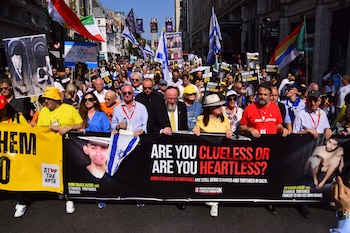
Demonstrations Mark Tensions in U.K. Over Middle East Politics
On a recent Sunday, hundreds of people gathered in front of the British Prime Minister’s residence at 10 Downing Street to protest for the release of Israeli hostages taken by Hamas on October 7 . This emotional march included the families of hostages, drawing attention to their plight, while also showcasing the rising tensions surrounding the ongoing conflict in Gaza .
The demonstration was organized by Stop The Hate UK and several Jewish organizations. Attendees were not only there to highlight the situation of the hostages—reportedly 20 believed to still be alive —but also aimed to criticize the recent actions of Keir Starmer , the leader of the British Labour Party. Starmer has faced backlash for possibly recognizing a Palestinian state amidst increasing calls for his support of Israel in its military operations aimed at freeing hostages.
Incidents Mar the Protest
The atmosphere of the protest quickly became charged when counter-protesters appeared, leading to a series of incidents that marred the event. Reports indicate that three arrests were made during the course of the demonstration, underscoring the level of volatility surrounding the issue. Police had to intervene after an altercation broke out between individuals from opposing sides, including a confrontation that involved a man throwing water at a pro-Israeli protester.
The remarks shouted by some activists, such as “ free Palestine ,” fueled discontent among demonstrators who were calling for the release of hostages. The complexity of the situation was palpable, with emotions running high on both sides, reflecting the broader tensions of the ongoing conflict.
Calls for Clarity from Leadership
In the midst of these rising tensions, the Chief Rabbi of the United Kingdom , Sir Ephraim Mirvis, publicly addressed Keir Starmer. He questioned how the Labour Party could consider recognizing a Palestinian state when Hamas—a group openly hostile to Israel—continues to threaten its existence. Mirvis’s call for clarity was echoed by many in the crowd, who believe that recognizing a state should not occur until the safety of the hostages is secured.
Amid this backdrop, the protest also witnessed strong reactions against Jewish speakers advocating for Palestinian self-determination . These individuals faced criticism from the crowd, indicating a divided opinion even within Jewish communities about how best to approach the situation. Rabbi Charley Baginsky , a prominent figure in the discussions, spoke out for an end to hostilities, urging for a ceasefire that would allow for humanitarian aid to be restored in Gaza while prioritizing the return of hostages.
Public Sentiment Divided
The sentiment among the demonstrators was polarized. While many supported calls for humanitarian aid and peace, others were less sympathetic. As discussions unfolded, chants of “ There is no agreement! ” echoed, highlighting the urgency felt by some participants for immediate action against Hamas. Among the demonstrators, slogans like “ Crush Hamas! ” were heard, showcasing the complex tapestry of opinions regarding the ongoing conflict.
The public discourse surrounding the Israeli-Palestinian conflict is characterized by deeply entrenched views on both sides, and this recent demonstration reflects a microcosm of those polarities playing out in London. The entangled narratives of hostages, recognition, humanitarian needs, and military actions are all aspects that continue to fuel protests and counter-protests alike.
This article aims to provide a comprehensive overview of the recent demonstration in London, highlighting the complex emotions, divides, and urgent calls for action from various segments of the community amid the backdrop of the ongoing Israeli-Palestinian conflict.