
Exploring the Mystery of the Ancient Temple in Jaén
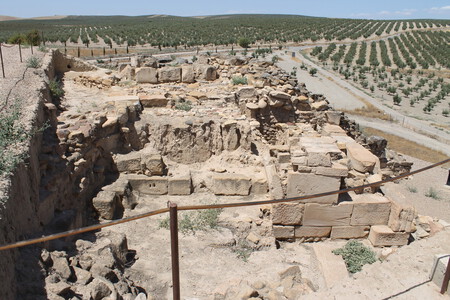
In the heart of Jaén, Spain, the site of the ancient Ibero-Roman city of Cástulo has long captivated historians and archaeologists alike. For decades, it has been believed that the ruins of a basilica-shaped building discovered at Cástulo represent a Paleochristian church dating back to the fourth century AD . This theory, suggested by discoverers in the early 1990s, was reinforced by the fact that Christian communities, and even bishops, were documented to be present in Cástulo during that time.
Despite this long-standing belief, a group of archaeologists is now challenging the conventional narrative. They propose an intriguing alternative: what if this structure, traditionally viewed as a Christian temple, served a different purpose entirely?
Understanding Cástulo: Situated near the modern town of Linares, Cástulo was once the capital of Oretania and is located just five kilometers away from the present-day town. The archaeological remains, particularly in an area known as “area 1”, reveal a structure that many have assumed to be a basilica from the fourth century AD . Excavations conducted between 1985 and 1991 led archaeologists to conclude that these were indeed remnants of an ancient Paleochristian temple .
The Basis for Belief: The belief that this site was a Christian temple was supported by several factors. Despite the absence of clear Christian artifacts during previous excavations, it was known that Cástulo had a thriving Christian community, with official records mentioning bishops as early as the fourth century. The architectural features and location of the building seemed aligned with what one would expect from an early Christian church.
However, this traditional understanding has been cast into doubt by new research. A recent study published by archaeologists Bautista Ceprián del Castillo, David Expósito, and José Carlos Ortega has raised the question: Could the site be a synagogue rather than a church?
Revised Theories: The archaeologists involved in this recent study examined findings from excavations carried out between 2011 and 2021. They argued that the evidence may now suggest that the site, referred to as “building S”, was maintained by a Jewish community that was present in the region during the fourth and fifth centuries AD.
New Discoveries: This innovative study points to a series of artifacts that hint at a different cultural affiliation. Among the discoveries, researchers found several ceramics decorated with symbols relating to Jewish culture , including a Menorah —a seven-branched candelabrum—alongside a piece of Tégula featuring a five-armed menorah. Most significantly, they uncovered a bowl containing Hebrew inscriptions that could suggest connections to Jewish rituals.
The recognition of these artifacts has sparked significant interest. The researchers state, “These elements lean towards suggesting the existence of a Jewish place of worship rather than a Christian one.” They also observed unique characteristics of the building’s layout that correspond with early Jewish synagogues.
Significance of Findings: The findings also broke ground in understanding the positioning of the temple, located in an area that was relatively secluded and near ancient Roman hot springs. At the time, such sites were often viewed by Christian authorities as pagan hubs. The reason behind this is clear; Roman baths were seen as gathering places for idol worship, making them contrary to Christian beliefs.
Furthermore, the absence of burials within or nearby the structure also raises eyebrows. According to early Christian practices, being buried near martyrs or significant religious figures was a common practice—a principle not observed in this context. Instead, the absence of burials seems to align with rabbinic traditions that necessitate graves to be set away from populated areas.
As the questions around the site continue to unfold, we find ourselves at a crossroads of historical reinterpretation . What if Cástulo’s ancient temple serves as a remarkable reminder of a well-established Jewish community in the area? As researchers continue to excavate and analyze, we may uncover more about the overlapping histories of Christianity and Judaism in ancient Spain, fundamentally altering our perceptions of religious life during that era.
This ongoing debate illustrates the importance of archaeology in reevaluating historical narratives, urging us to consider multiple perspectives when interpreting our past.