
The obsession with the perfection of Ryan Norbauer , an industrial engineer and entrepreneur, stems from his fascination with the retrofuturist aesthetics of Star Trek . This passion led him to the creation of the Seneca First Edition , a mechanical keyboard that has revolutionized the world of peripherals due to its quality, exclusivity , and staggering ultra-premium price .
Each unit integrates 682 mechanized pieces , meticulously designed and checked using three-dimensional CT scanners to ensure extreme tolerances and a quality standard never before seen in keyboards. Such craftsmanship comes at a steep price: $3,600 for its “simple” version and an astonishing $8,090 for the most complete model with a wood elevator.
It Seems From the Past, But It Is From the Future
Unlike typical industrial keyboards that are mass-produced on automated assembly lines, the Seneca is almost entirely assembled by hand. Experts invest one to two days to construct each keyboard, carefully reviewing every component to achieve the utmost acoustic and tactile refinement .
<img alt="The ideal mechanical keyboard" width="375" height="142" src="https://i.blogs.es/2ec82e/keychron-k5-max/375_142.jpeg"/>This obsessive approach has given rise to exclusive components developed by Norbauer, such as elastomeric capacitive switches , a chrome brass plate , and advanced materials including an aluminum with a ceramic finish as well as titanium for the Veracity Titanium model. Furthermore, the keycaps are manufactured in Germany by GMK using double PBT injection, while the overall design embraces a retrofuturist aesthetic inspired by 80s science fiction, mirroring the classic American vision of technology exemplified in Star Trek .
The Seneca is available in four chassis finishes: three in aluminum covered by ceramic oxidation (Oxide Gray, Travertine, and Heatshield) and one exclusive titanium model, all boasting a matte design resistant to fingerprints and scratches.
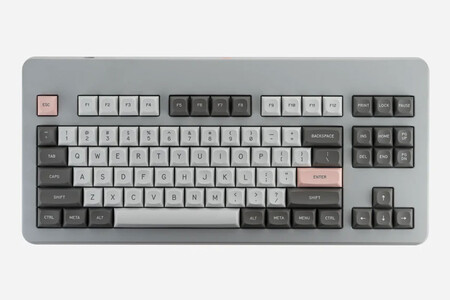
</div>Interestingly, the Seneca does not incorporate modern features typical of today’s mechanical keyboards such as RGB lighting , wireless connectivity, multimedia controls, or numeric keypad functionalities. Instead, users must purchase a separate CNC machined Kiaat wood accessory to adjust the typing angle, which adds an additional cost to the overall investment. This extraordinary level of craftsmanship and rarity differentiates it significantly from the mass-produced peripherals, transforming it into a coveted collector’s item.
The Birkin of the Keyboards
The Seneca First Edition is not only remarkable for its engineering; it also adopts a business model strikingly similar to that of Hermès Birkin bags . Norbauer intentionally limits production, establishing waiting lists ranging from six to nine months and requiring a non-refundable deposit of 10% to enter the queue.
This strategy crafts an aura of luxury and exclusivity , elevating its value and causing market tension. “It’s probably the most irrationally over-designed keyboard in the world,” Norbauer remarked in an interview with Adam Savage, reflecting the meticulous attention to detail inherent in this product.
The price begins at $3,600 for the aluminum versions and escalates to $8,090 for the Veracity Titanium model with wood support. Just possessing the opportunity to secure this keyboard has become an emblem of status among engineers and collectors in Silicon Valley , paralleling the Hermès strategy with limited supply, increasing demand, and consistently rising prices.