
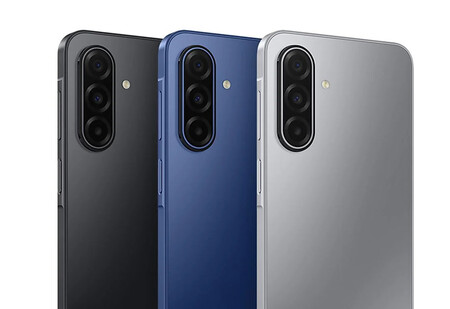
The Samsung Galaxy A17: A New Era for Software Updates
In today’s fast-paced tech world, manufacturers face a significant challenge — offering a minimum of five years of updates to their devices. This requirement stems from European policy aimed at enhancing user experience and ensuring longevity in devices. However, there’s a crucial distinction: five years of updates does not necessarily equate to five years of major updates. In an impressive move, Samsung has taken the lead with its latest device, the Galaxy A17, a low-end smartphone that not only complies with European legislation but goes a step further by promising six years of operating system updates, a true testament to its commitment.
Overview of the Galaxy A17
The Samsung Galaxy A17 is an entry-level smartphone that offers both four and eight GB of RAM configurations, alongside storage options of 128 or 256 GB . It’s powered by either the Exynos 1330 for 5G models or the Mediatek Helio G99 for 4G options. The Exynos 1330 was launched in 2023, while the Helio G99 dates back to 2022. This suggests that although Samsung is offering a competitive price, it does so with somewhat older components that might be less powerful, but more financially feasible at €230 for the 4/128 GB version and €309 for the 8/256 GB variant.
Samsung Galaxy A17 5G | Image: Mediamarkt
The Software Journey
The software component of the Galaxy A17 stands out significantly. It is launched with One UI 7 , based on Android 15 , backed by a remarkable promise: six years of operating system updates. This means that users can expect to experience up to Android 21 . Previously, such an extensive update schedule was exclusive to high-end smartphones. The stark contrast in capabilities is notable; the Z Fold 7 , with its robust engine, is built to handle future demands, while the Galaxy A17 operates on different dynamics.
Challenges of Long-Term Updates
Updating a mobile phone isn’t as simple as clicking a button. It requires complex optimizations tailored to the hardware specifications of each model. Additionally, the company must manage an increasing number of devices as time progresses. The Galaxy A17 from 2025 will still need updates alongside newer models, creating a mountain of devices that must be maintained.
The accumulation of devices over the years complicates the updating process.
By 2030, Samsung will be responsible for ensuring that numerous models, including the A17, continue to function efficiently while still receiving updates. This means not just transitioning from Android 17 to Android 18, but also making sure that the device remains usable throughout its lifecycle.
Hardware Limitations
Here’s where the challenge intensifies — hardware limitations. While high-end devices, equipped with cutting-edge processors like the Snapdragon 8 Elite , can easily endure multiple updates over years, the Exynos 1330 and Helio G99 processors are less equipped for long-term performance. As technology advances, the capabilities of low-end devices may become insufficient when newer applications demand greater resources.
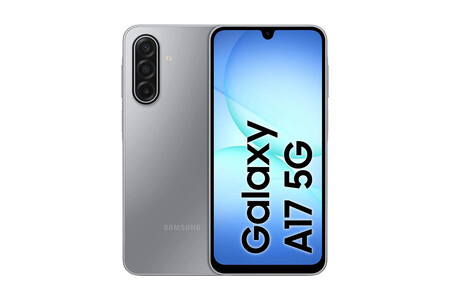
Samsung Galaxy A17 5G | Image: Mediamarkt
Turning Point for Software Policy
The Galaxy A17 represents a significant evolution in software policies pertaining to lower-end devices. Samsung’s promise of six years of updates challenges the status quo, previously dominated by high-end models only. In light of the EU’s requirement for a minimum of five years of updates, Samsung’s six-year commitment certainly looks appealing to the everyday consumer.
A Promising Future with Updates
It’s crucial to acknowledge that such long-term update commitments are relatively new in the industry and will soon be put to the test. Companies like Samsung, Honor, and Xiaomi have begun to step up their game, promising longer durations for updates. However, the true measure of their reliability will only emerge years down the line when we see if these promises materialize consistently across all tiers, not just the high-end devices.
As we move further into the future, the landscape of smartphone updates is likely to shift dramatically. Brands will need to find the right balance between updates and hardware capabilities. The stakes are high, and only time will tell how well they can adapt to meet the evolving needs of their customer base.