
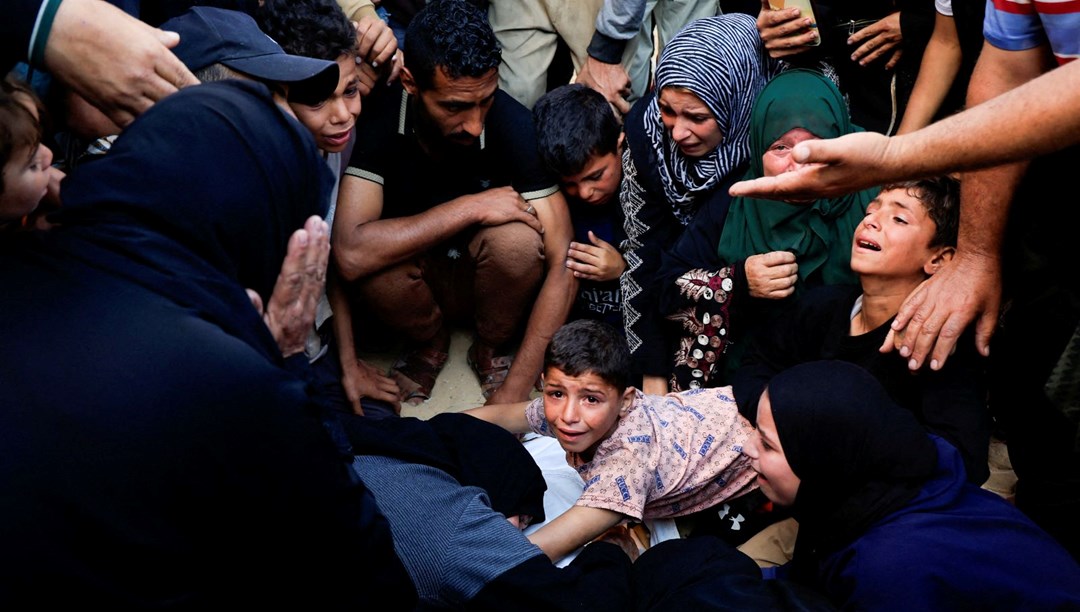
The Ongoing Humanitarian Crisis in Gaza
According to eyewitnesses and local sources, the Israeli military has launched aerial strikes targeting the homes and shelters of Palestinian people in various regions of Gaza . This renewed aggression has raised concerns over humanitarian conditions and the safety of civilians in the area.
Recent Attacks and Casualties
One tragic incident occurred in Khan Younis , located in southern Gaza, where an airstrike on a family home resulted in the deaths of four Palestinians, including two children. Such actions have left numerous others injured, further escalading the crisis in the region. The bombing signifies a dire situation for residents who are already enduring significant distress and loss.
Furthermore, the Israeli military has also targeted Palestinian tents in the Al-Mawasi area of Khan Younis, leading to a considerable number of injuries among those who are already vulnerable. Reports from the Al-Avde Hospital indicate that there were casualties in both the Nusairat Refugee Camp and the Ezzawyah town, highlighting the extensive nature of the attacks and their impact on civilians.
Statistics on Humanitarian Impact
The violence has reached a staggering scale. Following the 18 March resumption of hostilities after a ceasefire that began on 19 January , the death toll has soared. Since the Israeli military’s renewed assaults began, a reported 3,673 Palestinians , predominantly elderly women and children, have lost their lives, with an additional 10,341 individuals enduring injuries.
Moreover, since the onset of the attacks on 7 October 2023 , the death toll has skyrocketed to 53,822 Palestinians , while the number of injured has climbed to 122,382 . These figures illustrate the extensive human toll this conflict continues to exact on the civilian population, raising urgent calls for international attention and support.
Long-term Occupation Plans
Recent statements by Israeli officials, including Prime Minister Benjamin Netanyahu , indicate a shift towards permanent occupation of the Gaza Strip. Netanyahu has publicly declared intentions to occupy the entirety of Gaza, outlining plans that will systematically displace Palestinians to the southern regions, often referred to as “concentration camps.” This distressing vision includes promises of minimal humanitarian aid merely to ensure their survival.
Israeli ministers have articulated the plausible destruction of what remains standing in Gaza, proposing to further displace Palestinian residents southward and potentially beyond. This represents a radical escalation in the ongoing conflict and reflects a deeper strategy aimed at eradicating any semblance of Palestinian sovereignty in the region.
The International Response
The international community has largely expressed concern regarding the humanitarian implications of the current situation. Organizations focused on human rights have condemned the disproportionate violence and the targeting of civilian areas, calling for immediate action to protect the rights and lives of those caught in the conflict. Efforts to establish peace talks and negotiate ceasefires have repeatedly stalled, highlighting the reluctance of involved parties to make necessary compromises.
Hospitals in Gaza continue to operate under extreme duress, struggling with shortages of medical supplies and overwhelming numbers of wounded individuals. Humanitarian workers emphasize the critical need for access and support to deliver essential aid, yet the ongoing violence complicates these efforts constantly.
Humanitarian Access and Relief Efforts
With the backdrop of escalating military actions, the United Nations and various NGOs are attempting to deliver aid. However, blocked access and security risks hinder these initiatives substantially. Reports of humanitarian convoys being delayed or turned away only deepen the suffering of those in need. The lack of safe zones for aid distribution exacerbates the plight of the trapped civilian population.
As these dynamics unfold, questioning the effectiveness of current diplomatic efforts becomes crucial. The historical complexities and deeply rooted grievances between Israelis and Palestinians suggest that a sustainable solution requires both robust engagement from international mediators and genuine commitment from the involved parties.
The Human Cost of Conflict
The crisis in Gaza is an ongoing tragedy marked by an alarming humanitarian cost . Families live in fear as airstrikes continue, and daily life has been profoundly altered by the conflict. Children are particularly vulnerable, with many experiencing profound emotional and physical trauma. The psychological impact of living amidst constant violence cannot be overstated.
As hostilities continue, it remains paramount for the global community to advocate for peaceful resolutions and the protection of human rights. The civilian population of Gaza is in desperate need of assistance and a sustainable path towards reconciliation.