
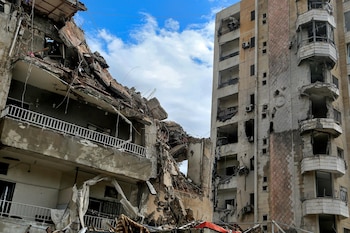
Recent Clashes in Southern Lebanon: Israeli Strikes on Hezbollah Targets
In a highly volatile region, the Israeli Defense Forces (IDF) have escalated their military actions in southern Lebanon. On Monday, the IDF announced the elimination of a Hezbollah operative in Nabatiye, a location situated north of the Litani River. This action is part of an ongoing conflict that has seen periodic flare-ups since a fragile ceasefire was established back in November 2024.
The Israeli military released a statement confirming that they had “attacked and eliminated a terrorist from the Hezbollah terrorist organization” on Sunday. This individual was reportedly located at a significant site for the group in the Nabatiye region. Israeli military spokesperson Avichay Adraee noted that this was not an isolated incident, as the IDF had also targeted what they described as an “underground military installation of Hezbollah” in the vicinity of the historic Beaufort Castle. This region has long been a focal point for military engagements due to its strategic importance.
During the same operations, an Israeli drone engaged a motorcycle in Fauqa, another area within the Nabatiye jurisdiction. The individual on the motorcycle, identified as Ibrahim Ali Taube, was critically injured in the strike and was later pronounced dead in the hospital. This incident further illustrates the escalating tensions between Israel and Hezbollah, with both sides exchanging threats and hostilities.
The Israeli government maintains that while there is a stated cessation of hostilities, they reserve the right to conduct military operations should they perceive any threatening activity from Hezbollah. As stated by Adraee, “the Lebanese army must immediately assume control of the region” and enforce a plan aimed at disarming Hezbollah, an organization that unequivocally refuses any such disarmament.
Hezbollah, a Shiite Muslim militant group and political party based in Lebanon, has been in a state of ongoing conflict with Israel since its inception in the 1980s. The group receives considerable support from Iran and has been implicated in numerous confrontations along the Israeli-Lebanese border. This latest spate of violence underscores the precarious nature of the ceasefire, which has been marked by outbreaks of violence and mutual distrust.
The Lebanese Armed Forces have struggled to gain control over areas where Hezbollah operates, leading to calls from the Israeli government for international intervention. Despite the fragile peace, Israel seems resolute in its approach, often citing the need for preemptive actions against perceived threats from Hezbollah.
Humanitarian concerns arise in the wake of these military strikes. Many civilians in southern Lebanon find themselves caught in the crossfire, fearing for their safety as military actions intensify. The repercussions of the conflicts extend beyond those directly involved, affecting tens of thousands of innocent civilians in the region.
Psychologically, the continuous state of hostilities has created a climate of fear and uncertainty among residents living near the Lebanese-Israeli border. The potential for further military escalation looms large, as both sides engage in a dangerous game of military positioning and rhetoric.
As the international community watches the situation unfold, the call for a lasting peace agreement remains unaddressed. Diplomatic efforts have been sporadic at best, with both sides deeply entrenched in their respective narratives and grievances.
Understanding the complexities of the situation requires not just an overview of military actions but also an acknowledgment of the broader geopolitical implications. The involvement of external players like Iran, the United States, and various European countries adds layers of complexity to an already volatile situation.
The recent incidents serve as a stark reminder of the enduring tensions that characterize Israeli-Lebanese relations. Until there is a comprehensive approach that addresses the root causes of the conflict, the cycle of violence is likely to continue, affecting not only the combatants but also the countless civilians who reside in this historically contentious region.
In essence, the situation in southern Lebanon continues to be precarious, with military actions by Israel highlighting an unresolved conflict that has persisted for decades. The regional and international stakeholders must prioritize dialogue and conflict resolution mechanisms to break the cycle of violence.