
The Serendipitous Discovery in Rothaargebirge
When metalwork goes wrong in a workshop, the typical response is to discard the flawed piece. This seemingly mundane outcome took a remarkable turn 2,000 years ago in the Rothaargebirge region of Germany. A chance finding of a lead ingot has sparked a wave of archaeological interest, revealing insights into how metals were produced in the Roman Empire.
The Catalyst for Discovery
The saga began when Peter Hoffman, a metal prospector from Brilon, stumbled upon a large cast lead ingot exhibiting Roman imperial craftsmanship. Understanding its importance, he alerted the authorities, paving the way for further investigation. This ingot wasn’t simply an abandoned piece; rather, it seemed to be casting failure left behind with the intention of reuse—an act that, fortuitously for archaeology, was never realized.
Unveiling the Roman Workshop
With the discovery as a clue, the archaeology team from the Westphalia-Lippe Regional Association (LWL) commenced excavation in June. The findings were astonishing: a lead processing site from Roman times, an unprecedented discovery in southwest Westphalia.
The Significance of the Find
While tombs and treasures often capture attention, this faulty lead ingot is invaluable for historical understanding. It offers the first solid archaeological evidence of a metallurgical production chain in Sauerland. It adds depth to our comprehension of how the Roman economy functioned, reflecting the complexity of metalwork during that era.
Tracing the Metal’s Journey
Roman ingots are not just raw artifacts; they often bear marks or engravings that trace their origins. This allows archaeologists to map out trade and distribution networks. The corpus of Roman ingots encompasses around 2,250 documented pieces from regions spanning Scotland to Morocco, and Portugal to Israel, painting a picture of extensive trade routes.
Contextualizing Lead Usage in Roman Times
Lead was a multifaceted metal in Roman society, employed for diverse applications like pipes, weights, and even sarcophagus linings. The Deutsches Bergbau-Museum Bochum emphasizes that lead extraction often coincided with silver mining, making the relationship between these two metals crucial for understanding local economies.
Insights from Excavation
Lead archeologist Manuel Zeiler notes that small amounts of lead found suggest a focus on efficient production rather than waste generation linked to silver extraction—a noteworthy detail since many ancient sites see both activities entwined. Previous research indicated mineral-rich deposits in the Brilon vicinity, hinting at past Roman metallurgist activities aimed at lead extraction.
Examining the Findings in Detail
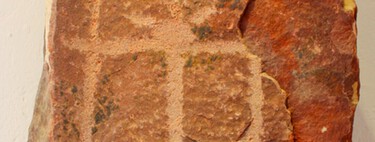
Led by Sebastian Magnus Sonntag, the excavation revealed ceramic fragments from pre-Roman times alongside lead remnants connected to metal production. The presence of carefully arranged stone slabs showed signs of fire, indicating that this site served as a roasting point where galena—lead sulfide—was processed and transformed into usable metal ingots.
Questions Still Unanswered
The excavation lasted only a few weeks and conclusions remain tentative. While early findings suggest the ceramics date to the beginning of the Roman imperial era, more analysis is needed, particularly of the charcoal remains. A lingering question is the identity of the metalworkers: were they Romans, local Germans, or artisans influenced by Roman techniques?
Conclusion
This unexpected find in Rothaargebirge not only enriches our understanding of Roman metallurgical practices but also reveals the interconnectedness of economies and cultures during that time. The ongoing research efforts underscore the significance of such serendipitous discoveries in unlocking the mysteries of our shared history.