

The Humanitarian Crisis in Gaza: Urgent Call for Action
The situation in the **Gaza Strip** is reaching catastrophic levels as the impact of ongoing conflict pushes the territory toward a severe humanitarian crisis. Reports indicate that the **death toll** is escalating, with recent estimates stating that **87 individuals** were killed by Israeli military operations within a mere 24-hour period. The **Hamas-run Health Ministry** in Gaza is flagging an alarming increase in casualties, primarily affecting women and children.
The **Israel Defense Forces (IDF)** have intensified their operations in Gaza over the past week, claiming that their actions are a legitimate form of self-defense aimed at ensuring the return of approximately **58 hostages** still held by Hamas. The Israeli government asserts that it is targeting militant factions within civilian infrastructure, which they accuse of using non-combatants as human shields.
Increasing Pressure for Ceasefire and Humanitarian Aid
Amid rising international outrage over the situation, Israeli Prime Minister **Benjamin Netanyahu** is under immense pressure to accept a **negotiated ceasefire** with Hamas and to lift the stringent blockade affecting Gaza. This pressure has reportedly come from key allies who can no longer tolerate visual evidence of **mass starvation** in the region. For the first time in over two months, Netanyahu allowed a limited number of **aid trucks** to enter Gaza. Still, the **United Nations’ World Food Program (WFP)** highlights that these measures are insufficient given the scale of the crisis.
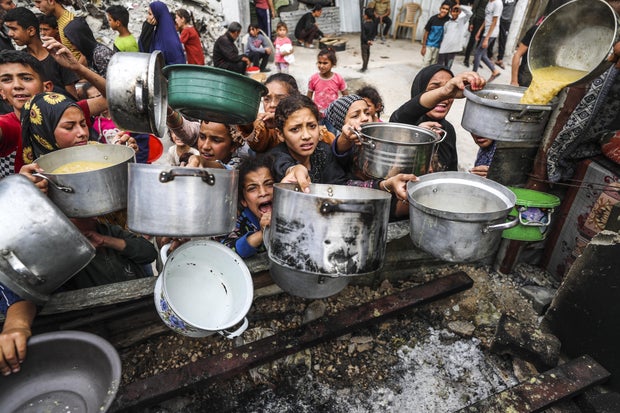
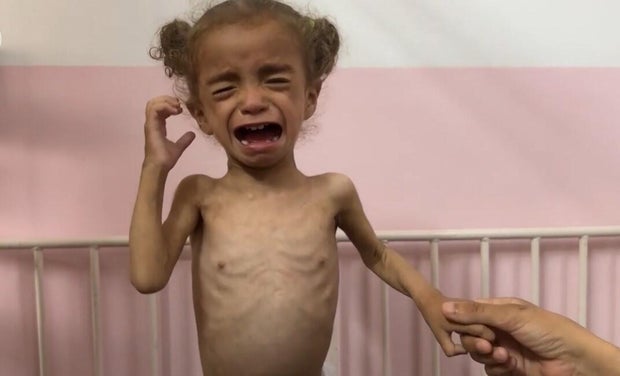
Reports indicate that thousands of aid trucks are awaiting entry across the Gaza border. After nearly **80 days** without any essential supplies, the humanitarian need is dire. According to WFP officials, around **14,000 children** are facing severe malnutrition, a situation that could lead to fatalities without immediate action. Antoine Renard, the WFP’s director for the Palestinian territories, emphasized that the international community must act before it’s too late.
Acknowledgment of the Crisis
Until recently, Israeli officials denied the existence of food shortages. However, Netanyahu’s recent admission of a looming hunger crisis marks a pivotal change in the narrative. In a public message, he emphasized the ongoing support from international allies but also noted their concern over images depicting mass starvation. He acknowledged that these images threaten to erode support, thereby influencing his government’s approach to aid delivery.
Renard has publicly stated that the WFP is prepared to provide sufficient food for the entire population of Gaza for a month, contingent on the lifting of the **blockade**. “The civilian population shouldn’t be trapped,” he argued, emphasizing that collective punishment should not be a tactic used against non-combatants.
International Response and Threats to Sanctions
Pressure for immediate action is not solely coming from the U.S. In a joint statement earlier this week, leaders from the **U.K.**, **France**, and **Canada** described the situation in Gaza as intolerable, threatening potential action if humanitarian assistance is not allowed. They condemned the Israeli government’s stance, raising alarms over possible breaches of **International Humanitarian Law**.
Netanyahu dismissed these threats as detrimental, arguing that calls for negotiating a ceasefire while Hamas remains armed signal a dangerous reward for the group’s prior aggression. “Israel will continue to defend itself until total victory is achieved,” he asserted.
The War’s Toll on Humanity
Since the resurgence of conflict following the Hamas-led terrorist attack on October 7, 2023, the human cost has been staggering. Reports from the **Hamas-run Health Ministry** indicate more than **53,500 fatalities** among Palestinians, with over **90%** of the population displaced. Medical facilities are overwhelmed, supplies are dwindling, and doctors struggle to address both malnutrition and injuries from ongoing strikes.
As conditions worsen, the **international community’s** response remains critical. The time for action is limited, and the consequences of inaction could exacerbate an already dire situation, leading to long-term implications for both Gaza and the broader geopolitical landscape. It is imperative for interested parties to take decisive steps to alleviate human suffering before reaching a point of no return.