
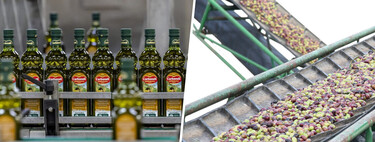
Olive Oil: The Pinnacle of Culinary Fats
We tend to see olive oil, and especially the extra virgin or AOVE (Aceite de Oliva Virgen Extra), as the cusp of the pyramid in terms of food fats. This perception is not just based on its culinary excellence, but also on its notable health impact . The pivotal question remains: Is this cornerstone of the Mediterranean diet truly deserving of its health accolades?
Fats are not merely a necessary evil in our gastronomy; they are one of the critical macronutrients our bodies rely on, alongside carbohydrates, proteins, and micronutrients. Compounds such as cholesterol and triglycerides are essential for various bodily functions. For instance, they provide energy, facilitate nutrient absorption, and even act as messengers within our cells. Nevertheless, excessive accumulation of cholesterol may lead to health complications, particularly affecting cardiovascular health.
Understanding nutrition is complex. The different types of lipids can have varying effects on our health. Importantly, each food product contains distinct proportions of these compounds. Assessing the health impact of certain foods necessitates extended observation of the health status of individuals who consume them over time.
The notion that olive oil is superior to other fat sources, particularly regarding health benefits, is widely accepted. This belief is largely attributed to its status as a fundamental component of the Mediterranean diet , consistently ranked among the world’s healthiest dietary patterns.
However, the mere association with health does not guarantee that olive oil is a universally beneficial option. Luckily, we now have tools to measure this, including an index developed by the Fat Institute (IG), a research center linked to the CSIC (Higher Council for Scientific Research).
After examining various sources of culinary fats—both animal and vegetable—the IG team introduced an index that scores fats on a scale from 0 to 100, with 100 being the highest score and 50 marking the minimum “approved” level. The team formulated the index based on dietary recommendations and health claims established by leading global organizations.
The findings? Among the top four rated fats, three were olive derivatives. Virgin olive oil emerged as the highest-rated fat, securing a perfect score of 100. According to the study published in the journal Nutrients, a notable factor contributing to this high score was its high oleic acid content.
Ranking of Culinary Fats
Following virgin olive oil, three other fats achieved a score of 86: common olive oil , olive pomace oil , and flaxseed oil . In contrast, sunflower oil and sesame oil ranked immediately behind, obtaining a score of 82.
Overall, vegetable fats were rated more favorably compared to those of animal origin. Fish fats received a better evaluation, while beef tallow (45), lard (45), and butter (32) were among the lowest ranked. Surprisingly, margarine scored even lower at 14, while coconut oil earned a score of zero.
This evaluation is supported by other experts, including those from Harvard Medical School . They point out that olive oil is rich in monounsaturated fats , which confer numerous health benefits. These fats contain only one double bond between carbon atoms, making them less hydrogenated than saturated fats, hence remaining liquid at room temperature.
According to Howard E. Lewine, Chief Editor of Medicine at Harvard Health Publishing, “Olive oil is abundant in monounsaturated fatty acids , comprising around 75% of its volume. By replacing saturated fats with monounsaturated fats, we can significantly reduce ‘bad’ LDL cholesterol levels.” The unique health benefits of olive oil have been linked to its antioxidant and anti-inflammatory properties.
In summation, while olive oil continues to enjoy its reputation as a healthful fat, evaluation tools and scientific studies provide a greater understanding of its health benefits versus other culinary fats. By integrating such informative insights into everyday culinary practices, we can enhance our nutrition while enjoying one of the vital elements of the Mediterranean diet.
Image credit: Umbe Ber