
BYD’s Leap into the Future: A Copycat Strategy
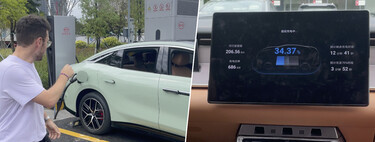
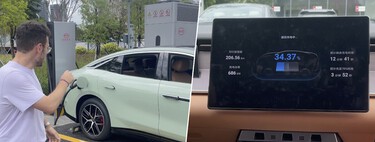
Just a year ago, my visit to China revealed a groundbreaking innovation: BYD’s 1 MW chargers. Initially filled with skepticism, I witnessed chargers capable of delivering 1,000 kW, technology that felt straight out of a sci-fi movie. However, my apprehensions faded as firsthand experience demonstrated their remarkable efficiency.
The Bold New Promise
BYD’s latest commitment solidifies its strategy for the future: the introduction of 300 charging posts, each offering a staggering 1,500 kW by the end of 2027 in Spain. This leap from 1 MW chargers signifies a remarkable power increase, elevating them to new heights.
The Reality of High-Speed Charging
During a recent demonstration in Madrid, I witnessed the impressive capabilities of these chargers. While the 1,000 kW models saw a drop in power after 80% battery capacity, the new 1,500 kW chargers can boost a battery from 10% to 97% in just nine minutes. Remarkably, this is nearly as fast as refueling a conventional gasoline vehicle.
How Does It Work?
The success of these ultra-fast chargers relies on compatible vehicles, particularly the newly introduced Denza Z9 GT. This plug-in hybrid and electric sedan is designed to take full advantage of BYD’s charging technology, making long-distance electric travel comparable to traditional gasoline vehicles.
Infrastructure Enhancements
BYD’s chargers also feature a backup station near each charging point, storing batteries that ensure a continuous power supply even during peak usage times.
A Game-Changing Impact
There is a significant difference between BYD’s 1,500 kW technology and existing chargers in Spain, which typically offer around 350 kW. The Denza Z9 GT and BYD chargers push the boundaries of current expectations, providing charging speeds that revolutionize the user experience.
Understanding the Numbers
Charging a 100 kW battery at 350 kW translates to recovering 400 kilometers of range in about 15 minutes. While this might not seem like much for long journeys, it’s a compelling option for quick stops.
Strategic Positioning
BYD’s intentions extend beyond mere numbers. The company aims to establish itself as a leader in charging technology, offering exclusive benefits to its consumers. This not only builds brand loyalty but also reassures electric vehicle skeptics that they can rely on a robust infrastructure when needed.
Cost Efficiency
BYD promises to maintain charging costs at approximately 0.50 euros per kWh. For a 100 kW charge, this equates to about 50 euros, making the cost of electric travel competitive with gasoline vehicles.
Future Considerations
This innovation is crucial for the electric truck sector, where high-power charging is essential to minimize downtime. BYD is positioning itself to be at the forefront of this upcoming wave of electric heavy-duty vehicles.
Following Tesla’s Footsteps
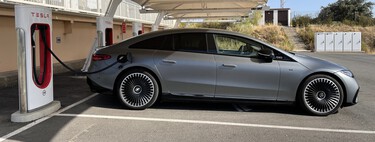
BYD’s strategy mirrors that of Tesla, which initially captured the market with cutting-edge technology and a dedicated charging network. By entering a more mature market, BYD is uniquely positioned to attract consumers seeking advanced charging solutions, especially electric vehicles.
Conclusion
As BYD forges ahead with its ambitious plans for fast charging infrastructure, it stands to gain a robust reputation and brand image in the growing electric vehicle market. By prioritizing innovation and power reliability, BYD is set to reshape the future of electric mobility in Spain and beyond.
Photo credits: Hector Ares for Motorpassion