

Russia and China: A Strategic Military Alliance Unveiled
In July, the veil over Russia’s military cooperation with China was lifted as reports revealed the “refrigeration units” used in drone multiplication. This development wasn’t entirely unexpected; Ukraine had already uncovered evidence of Chinese support aiding Russian drone technology. The growing alignment between these two nations came into sharper focus with a recent leak of documents, revealing that Russia is not merely selling weapons to China but is also actively training them to use these systems effectively.
A New Axis of Power
The leaked documents , numbering in the hundreds, shared by the hacktivist group Black Moon , painted a concerning picture of a deepening military alliance. Analysts from the Royal United Services Institute (RUSI) in London, along with major news outlets like the Associated Press and the Washington Post , dissected these leaks. The findings illustrated signed agreements, detailed material lists, delivery schedules, and meticulously charted training programs, all aimed at preparing Chinese airborne forces for a potential invasion of Taiwan.
Russian Military Hardware for China
Sources indicate that Moscow has agreed to supply Beijing with an extensive arsenal intended for a Chinese airborne battalion. This includes 37 BMD-4M amphibious assault vehicles , 11 Sprut-SDM1 self-propelled anti-tank guns , 11 BTR-MDM armored personnel carriers , along with several command and observation vehicles. The total value of this contract exceeds 500 million dollars and incorporates specialized parachute systems capable of launching loads of up to 190 kilos from altitudes of 8,000 meters, enabling infiltration operations with minimal risk .
The Technological Leap for China
Beyond acquiring hardware, these agreements encompass training sessions conducted by Russian specialists , both in Russia and China. This training provides insights into tactics, procedures, and command and control systems developed in real operational environments. For China, this knowledge transfer is essential; it helps bridge the gap in airborne operations that its military has not yet fully mastered. As the People’s Liberation Army accelerates its modernization efforts aimed at outpacing the United States by 2050 , Russia becomes an invaluable partner.
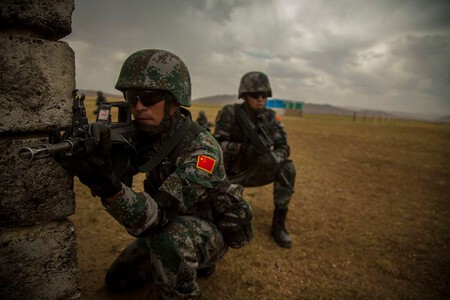
Chinese Soldiers With The People’s Liberation Army
Aiming for Taiwan
Military analysts agree that the bolstered Chinese airborne capabilities are directly targeting Taiwan. Invasion plans necessitate not only a large-scale amphibious landing but also the swift capture of critical infrastructure—airports, ports, and logistics hubs—to sustain operations against potential U.S. intervention. Chinese military strategists believe that deploying highly trained, well-equipped elite units capable of rapid air insertion is crucial. The lessons learned from Russian operations provide a valuable learning experience for China’s strategy.
The Mutual Interests of Russia and China
Russia’s motivations in this partnership are multi-faceted. Faced with economic sanctions and a strained military-industrial complex due to the ongoing war in Ukraine, Moscow seeks vital revenue streams and fresh markets. By positioning itself as a military technology supplier to Beijing, it opens avenues for financial inflow while potentially embroiling China in a conflict that could divert U.S. attention across multiple fronts.
This asymmetrical relationship emphasizes the dichotomy: China enhances its arsenal while gaining sufficient doctrine and experience, potentially outpacing Russia in the years to come. Conversely, Russia gains financial resources and geopolitical relevance, though there are concerns it may eventually be overshadowed.
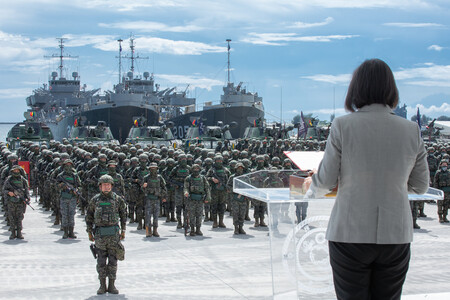
Taiwan Marine Corps Battalion
Regional Implications
The ramifications of this alliance are alarming for Taiwan. The transfer of airborne capabilities raises concerns about a coordinated Chinese offensive. Taiwanese military drills this year included simulations to counter airborne assaults, reflecting a growing awareness of potential threats. For the U.S., the implications are equally troubling. The Pentagon’s efforts to allocate resources towards the Indo-Pacific become considerably more complex, as a united front between Russia and China only exacerbates existing security challenges.
Geopolitical Consequences
The implications of these leaks extend beyond simple arms transactions; they signify a strategic realignment that could significantly impact the military balance in the Asia-Pacific region. With China gaining crucial insights into airborne warfare from Russia, and Moscow benefiting financially and geopolitically, the stage is set for a potential crisis centered on Taiwan, especially as the timeline for possible military action approaches 2027.