
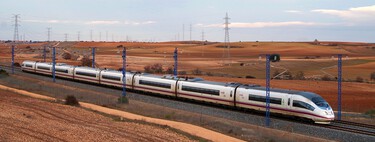
The ongoing conflict over the utilization of Renfe’s workshops is evolving, marked by escalating tensions and legal maneuvers. As appeals to the National Commission of Markets and Competition (CNMC) unfold, industry stakeholders are starting to lay out quantitative data that underscores the gravity of the situation.
Current Situation: Iryo vs. Renfe
Iryo and Renfe are currently embroiled in a dispute regarding access to Renfe’s facilities, particularly concerning the maintenance of heavy machinery. To understand the stakes, let’s break down the positions of each party involved.
Renfe’s Position
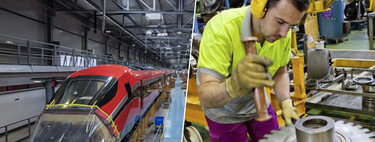
Renfe asserts that it is only required by law to allow competitors access to partial workshop facilities for light maintenance. Heavy maintenance, which Iryo’s operations require, falls outside this provision. Renfe previously reported that another operator, Ouigo, conducted unauthorized heavy maintenance at its workshops, citing further disruptions to their service capacity.
The company estimates that if Iryo occupies space designated for their own operations, they may need to remove around 1.2 million seats from service, translating into estimated losses of up to 60 million euros.
The CNMC’s Perspective
The CNMC has weighed in, suggesting that if Iryo has to transport trains back to Italy for heavy maintenance, it would disadvantage them significantly. This situation mirrors instances in France where service interruptions occurred, raising safety concerns over maintaining trains without proper oversight and service continuity.
Consequently, the CNMC has mandated that Renfe must allow Iryo to use its facilities for these critical maintenance tasks. As a result, Renfe will receive compensation akin to a rental arrangement for the space used by Iryo.
Iryo’s Counterarguments
From Iryo’s standpoint, relocating their trains to Italy imposes an additional cost estimated at 17 million euros. They claim they only require access to 7% of Renfe’s workshop facilities, suggesting that the impact on Renfe’s operations would be minimal.
Iryo further argues that if its trains are sent to Rome for maintenance, they would be sidelined for roughly two months. This operational downtime is crucial, as Iryo competes with only 19 trains, whereas Renfe operates 270 high-speed trains. They contend that these maintenance actions are dictated by mileage and that Renfe was well aware of the scheduling implications.
Implications for Railway Liberalization
The backdrop of this conflict is the broader context of railway liberalization in Europe, which has led to fierce competition not just on the tracks but in operational capabilities. Renfe has consistently sought to restrict Iryo’s access to essential facilities while also reminding stakeholders that they are mandated to serve all high-speed routes, not just the most lucrative ones.
Interestingly, Iryo initially indicated plans to establish its own maintenance workshops but has made little progress in this area.
Iryo’s need to maintain its operations in Spain highlights the upheaval within the railway sector. France’s exigencies, where companies were forced to return trains for maintenance, underscore similar challenges faced by Renfe, particularly regarding its expansion into new markets.

As operators navigate this dynamic landscape, the future of their services and market positioning will likely hinge on the outcomes of these disputes. The interplay between regulatory requirements and competitive strategies will continue to shape their operational frameworks in a rapidly evolving industry.
Photo | Smiley.toerist and Renfe