
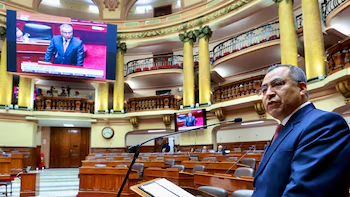
Aldo Prieto’s Interpellation: A Plenary Session Marked by Absence
The recent interpellation of Aldo Prieto Barrera, the Minister of Transport and Communications (MTC), highlighted significant issues within Peru’s congressional system. On a Thursday afternoon, Prieto faced a set of 22 questions concerning critical infrastructure projects amid a notably low attendance—fewer than 20 of the 130 parliamentarians were present.
Context of Low Attendance
This lack of participation is not isolated. Parliamentary sessions have consistently shown less than half of lawmakers in attendance, especially during discussions of vital legislation. Notably, long-standing parties such as Popular Force, Free Peru, and Alliance for Progress have exhibited empty seats, particularly evident as many legislators focus on re-election campaigns outside of Parliament.
The interpellation, approved on March 12 with 33 votes in favor, 39 against, and 8 abstentions, aimed to question Prieto about his management of major infrastructure projects, particularly the ambitious New Central Highway.
Key Issues Raised by Congress
The interpellation included questions regarding:
- The Santa Rosa viaduct and Santa Rosa Bridge.
- Financial adjustments affecting the New Central Highway.
- Accountability and risk assessments prior to contract resolutions.
Critics argue that these discussions about important infrastructure matters are being sidelined by legislators chasing campaign activities, leading to a decline in robust oversight.
Challenges to Oversight
Images of empty seats during critical debates have become increasingly common. The ease with which parliamentarians can present medical excuses has contributed to this absenteeism. The Chief Congress Officer’s lack of stringent attendance verification has rendered parliamentary presence a mere formality.
Minister’s Response to Questions
Prieto’s statements during the interpellation were directed at clarifying:
- Legal, economic, and social assessments taken before contract modifications.
- Mechanisms for transparency and accountability regarding project execution and public participation.
Notably, he was also asked about potential external influences on project contracts, particularly concerning Chinese investment, and whether specific exceptions for vehicle transit could exacerbate structural concerns on the Central Highway.
Demands for Transparency
Congress has called for greater transparency in interactions with regional governments and local stakeholders, insisting on the elimination of delays due to land acquisition issues. There is a strong demand for “fast-track” contractual actions to ensure the project’s timely progression, as it has been projected to extend into 2029 if issues remain unresolved.
Example Questions Highlighting Concerns
Among the pressing inquiries made to Prieto were:
- What justifies the budget cut for the New Central Highway project, particularly given that funding initially allocated seems insufficient for starting actual construction?
- What legal frameworks validated the termination of essential technical support for the project?
- How is the MTC ensuring timely public access to information regarding project developments?
As the political climate heats up with looming elections, the question remains whether accountability, both within Congress and in infrastructure governance, can hold against the pressures of political maneuvering.