
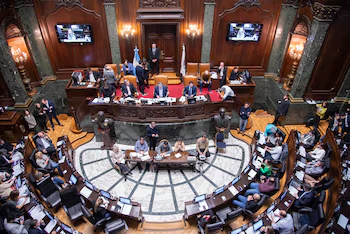
Intense Agenda in the Buenos Aires Legislature
The Buenos Aires Legislature has convened to discuss a series of impactful projects that affect the daily lives of residents. Led by Head of Government Jorge Macri, the session focuses on crucial topics, including the financing of Subway Line F, a proposed Anti-Trafficking Law, and initiatives surrounding vaping regulations, vehicle technical verifications (VTV), and personal debt relief.
Financing Subway Line F
One of the key projects under consideration is the financing of Subway Line F, which will mark the first major addition to Buenos Aires’ underground network in 25 years. The Executive Branch is seeking approval for public credit operations to fund the construction, which is projected to cost approximately $1.35 billion. This funding will be sourced from multilateral organizations, financial entities, and the issuance of debt securities.
The 9.8-kilometer line will connect neighborhoods, specifically linking Palermo to Barracks, enhancing connectivity and urban mobility throughout the city. With 12 planned stations, including crucial connections to existing subway lines and railways, Line F is a significant step forward in improving public transport in Buenos Aires.
Anti-Trafficking Law
Another significant proposal is the Anti-Trafficking Law, which aims to increase penalties for unauthorized parking and other public space activities, commonly known as “ragitos” or “car guard.” This law addresses a prevalent issue in the city, aiming to protect both citizens and the legality of public spaces.
Regulation of Vaping Devices
In response to the growing concerns about youth vaping, legislator Manuela Thourte has introduced a proposal to regulate the use, sale, and promotion of vaping devices and tobacco products. This initiative focuses on restricting access to minors under 18, as concerns have escalated regarding the health impacts of these products on younger populations. Claudia Negri observed that vaping is widely accessible to minors, highlighting the urgent need for regulation in this area.
Reformation of Vehicle Technical Verification (VTV)
Freedom Advances has proposed a sweeping reform of Law No. 2,265, which governs Mandatory Vehicle Technical Verification. This initiative aims to deregulate service provisions, expand competition, and align technical requirements with technological advancements. The changes suggest that new vehicles will only require their first technical verification after five years, with subsequent checks adaptable based on age and usage. This reform is designed to alleviate congestion in verification plants by eliminating service quotas and allowing more providers to operate.
Family and Personal Debt Reduction Program
Additionally, the legislature is considering a Family and Personal Debt Reduction Program, aimed at addressing over-indebtedness among vulnerable sectors. Spearheaded by deputy Leandro Santoro, this program proposes a special, tax-exempt line of credit to aid households struggling with debt. With a competitive annual nominal rate of 40% and flexible repayment terms, the initiative targets those with significant monthly debts relative to their income.
The project notably excludes debts related to food, taxes, and vehicle financing incurred after the law’s enactment. Furthermore, provisions prioritize households with minors, older adults, and individuals with disabilities.
Conclusion
The Buenos Aires Legislature’s current session is centered around projects that not only enhance infrastructure and public safety but also address urgent social issues. As initiatives like Subway Line F and the Anti-Trafficking Law come to fruition, they represent critical steps towards a more connected and secure Buenos Aires.