
Senate Initiative to Reduce Working Hours
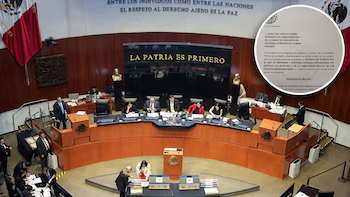
The Senate of the Republic has officially received a groundbreaking initiative aimed at reducing weekly working hours from 48 to 40. This proposal marks a critical shift in labor practices, aiming to enhance the quality of life for workers across the country.
The Proposal’s Significance
Laura Itzel Castillo Juárez, president of the Board of Directors, emphasized that the initiative addresses one of the most pressing demands from the workforce. The reform proposes an amendment to Article 123, Section A of the Constitution, in line with international labor standards that advocate for humane working conditions. The proposed changes are not only timely but essential in modernizing labor laws that have remained static for over a century.
Focus on Decent Work
In her communication to the Senate, Castillo outlined that the primary aim is to uphold the constitutional principle of decent work, established in 1917 in the wake of the Mexican Revolution. The proposed changes reflect an ongoing labor modernization process, placing an increased emphasis on rest, quality of life, and labor justice.
Key Features of the Initiative
The proposed legislation includes several pivotal features:
- A maximum working day of 40 hours per week.
- One mandatory day off for every six days worked, with full compensation.
- New regulations governing overtime work, which must now be compensated at double the regular wage, capped at 12 hours spread over a maximum of four days.
Historical Context and Demand for Change
This conversation about reducing the workday has gained traction in recent years, spurred on by rising stress levels and burnout associated with contemporary work environments. Currently, Mexico ranks among the OECD countries with the highest number of annual work hours, coupled with surprisingly low productivity rates.
International organizations have long been advocating for a reevaluation of working hours to boost equity and improve physical and mental health, family dynamics, and overall productivity.
A Gradual Implementation Plan
The federal government, led by President Claudia Sheinbaum, shared a phased approach to this reform aimed at allowing businesses to adjust effectively:
- 2027: 46-hour work week
- 2028: 44-hour work week
- 2029: 42-hour work week
- 2030: 40-hour work week
The government has assured that this reduction will not adversely affect wages, salaries, or benefits, aiming instead for an enhanced work-life balance.
Conclusion and Next Steps
Following the delivery of this historic initiative, Castillo took to social media to underscore its significance, stating, “We have just received in the Mexican Senate a historic initiative that responds to one of the most heartfelt demands of working people.” As the Senate deliberates this pivotal reform, the focus will be on ensuring that the needs of both workers and employers are taken into account while fostering a more balanced working environment.