
Indigenous Demonstrations Block Access to Mayor’s Office in Medellín
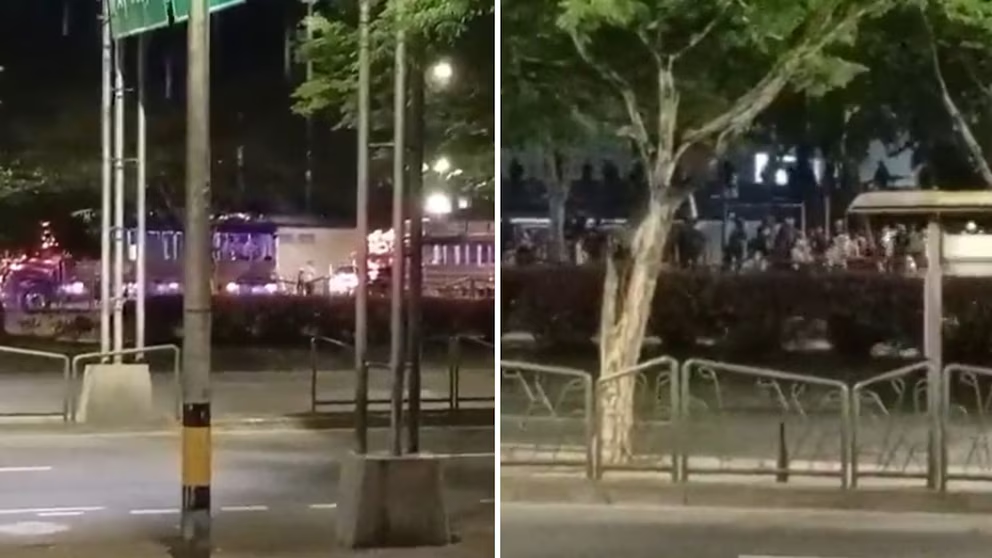
In the early hours of March 16, a large assembly of indigenous individuals arrived in Medellín, blocking access to key governmental facilities and causing significant disruptions in mobility across the city. This demonstration involved around 500 participants, primarily from Urabá and Southwest Antioquia, who peacefully protested against the local administration headed by Governor Andrés Julián Rendón.
Impact on Mobility and Public Services
The Ministry of Mobility officially reported at 5:02 a.m. a closure at the La Alpujarra roundabout due to the gathering. Motorists and pedestrians are being advised to utilize alternate routes such as 33rd Avenue and Villanueva Avenue to bypass the blockage. The local Dialogue and Maintenance of Order Unit (Undmo) has been deployed to maintain order and ensure public safety.
This blockade has severely impacted vehicle and pedestrian traffic in Medellín’s administrative center. Officials and citizens alike are experiencing difficulties accessing public offices, which has resulted in delays in official procedures and heightened frustration.
Indigenous Voices and Their Demands
The Indigenous Organization of Medellín has voiced their requirements for direct dialogue with the Departmental Government. They describe this mobilization as a legitimate act of protest and a call to the government to address the pressing issues faced by indigenous communities. The demonstration represents the collective stance of over 2,000 men and women drawn from various indigenous groups, including the Embera Eyábida, Embera Dóbida, Embera Chamí, Guna Dule, and Senú peoples.
Unaddressed Issues
The organization highlighted several critical concerns that need government attention, including health care access, educational equity, food security, and territorial rights. They argue that their demands, recognized by the Political Constitution of Colombia and international treaties, reinforce their right to mobilization and dialogue.
Tensions Between the Government and Indigenous Leaders
Governor Andrés Julián Rendón has attributed the current mobilizations to ongoing political tensions and conflicts arising from the management of educational appointments in indigenous communities. He expressed concern over the outbreak of tensions stemming from recently changed leadership in various indigenous groups, particularly around the appointment of teachers.
Rendón asserts that previous agreements regarding educational personnel have been challenged by new leaders seeking different arrangements. He categorically stated that threats or disruptions will not sway the administration’s policies or decisions.
Future Steps and Dialogue
The ongoing blockade has prompted the government to condition dialogue on the lifting of these protests. Meanwhile, the indigenous representatives continue to push for their legitimacy as the appropriate interlocutors for discussions regarding their welfare.
In summary, the situation remains fluid as both parties navigate this complex issue, which is rooted in historical grievances and contemporary governance challenges. The possibility of achieving a resolution hinges on open lines of communication and a willingness to address the concerns raised by the indigenous communities.