

In recent months, chocolate prices have continued climbing , causing concern among consumers and industry alike. Recent data from the Consumer Price Index (IPC) indicates that the cost of chocolate has increased by an astonishing 19% compared to a year ago, which raises a pertinent question: Is chocolate becoming a luxury item? The ripple effects of inflation are palpable; while the demand for chocolate remains surprisingly sturdy, it is clear that the mounting prices are starting to take a toll .
As we delve deeper into the statistics, we uncover a troubling trend for chocolate enthusiasts. Cocoa—a key ingredient—has not just been soaring in price but is also contributing to a 13% increase since January. The IPC data reveals that chocolate itself is 18.8% more expensive than last year, while cocoa powder sees increases of 11.8% . Such figures are significantly higher than the general inflation rate, which hovers around 1.8% .
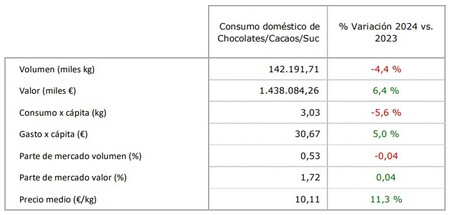
As fiscal challenges mount, consumption patterns are shifting. The price increase compels many consumers to look for other, less expensive options. Despite this, a report from the Ministry of Agriculture reveals a 4.4% decline in overall chocolate consumption compared to the previous year, with per capita chocolate intake plunging by 5.6% , leaving the average individual consuming about 3.03 kilos annually.
“In the long term,” says a spokesperson from the Ministry, “Spanish households are buying 4.7% less chocolate and cocoa products compared to 2008.” While this trend influences the industry differently, it’s worth noting that traditional chocolates grew by 6.2% even amidst a general contracting demand for its derivatives.
Shifting our focus to the latest data sheds further light on this bleak outlook. The Ministry reports that between March 2024 and March 2025, the demand for chocolate and cocoa plummeted by 6.1% , leaving per capita consumption at an alarming 2.96 kg . This decline has broader implications as it highlights the disparity between volume consumption and overall market value.
Interestingly, despite fewer kilos being sold, the monetary value of the chocolate market continues to climb. The latest reports indicate a 7.1% increase in revenue, attributed to the higher prices consumers now pay for the same products. For instance, the average price of chocolate products has escalated to €10.11 per kilo, marking a 11.3% surge from the previous year.
Year (to March) | Consumption (kg/person) of chocolates/cocoa |
|---|---|
2025 | 2.96 |
2024 | 3.19 |
2023 | 3.21 |
2022 | 3.54 |
2021 | 4.03 |
Despite the tumultuous circumstances, the industry remains resilient. Exports have become increasingly vital, helping to offset domestic consumption drops. For example, in 2024, while the volume of chocolate consumed decreased by 3.9% , its value soared by 7.5% . This signals a determined effort from producers to adapt to changing market dynamics, though they face ongoing pressure from rising raw material costs.
The pressing question is what lies ahead for the chocolate market. Recent reports indicate that while prices might be stabilizing, the demand landscape remains in flux. The global chocolate industry continues to witness shifts—consumers are grappling with inflation yet still find ways to indulge in this beloved treat, albeit in reduced quantities.
In conclusion, as chocolate lovers ponder whether their favorite indulgence will continue to be available at reasonable prices, the industry will undoubtedly attempt to balance cost, quality, and consumer expectations. As markets swing and adjust, vigilant consumers will remain critical spectators in the ever-evolving chocolate theater.