
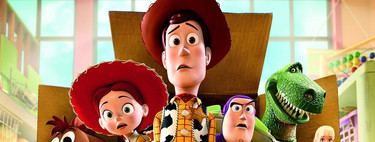
Seen today, ‘Toy Story’ remains as fresh, fun, and surprising as it was in its day. The impact of Pixar’s first film on animated storytelling is undeniable. Its influence extends to the aesthetics, plot structures, and characters of subsequent Pixar films, highlighting its foundational significance. Today, however, the creative processes behind it appear rudimentary, much like the early iterations of techniques such as rotoscope or stop motion.
Animation Techniques of the Era
In a recently uncovered video, Pete Docter, the film’s animation supervisor, shares insights into the basic techniques used to animate characters. Notably, the team relied on audio recordings for sketching movements, underscoring a surprisingly intuitive approach to animation. Contrary to popular perception, computer animation was far from automated; it involved significant human artistic input.
Docter’s Role in Pixar
Docter not only animated in ‘Toy Story’ but also worked on the narratives of many Pixar hits, including ‘Inside Out’ and ‘Up’. His dual expertise in both technical and creative aspects played a crucial role in shaping the movie. The process of character design and story development was as pivotal as the technical animation itself.
RenderMan: The Heart of Toy Story
Central to the animation process of ‘Toy Story’ was RenderMan, Pixar’s proprietary 3D rendering software. Developed since the mid-1980s, RenderMan proved instrumental in achieving realistic lighting and volumes, even on rudimentary computers of the early 1990s. Its success transformed it into a staple across film productions, establishing a new standard for computer-generated special effects.
Pioneering Visual Effects
The success of ‘Toy Story’ also marked a turning point for Pixar, which began as a division of Lucasfilm focused on software development. The company’s early foray into animation included award-winning shorts like ‘Tin Toy‘, which showcased novel textures and shadow dynamics that laid the groundwork for ‘Toy Story’. Following its critical acclaim, Pixar secured a deal with Disney to produce feature films.
Overcoming Production Challenges
In 1993, Pixar faced operational hurdles during ‘Toy Story’ production. Initial estimates for staffing and computing power fell drastically short; they expected to manage with eight animators and 53 processors, but the final count reached 33 animators and 300 processors. Their inexperience often led to optimistic projections, yet this uncertainty also sparked creativity, driving the team to explore uncharted territories in animation.
Learning from the Past
Anticipating that technological advancements would ultimately render their animations outdated, the team closely studied classic films that maintained their appeal despite aging effects. They recognized that compelling storytelling could transcend even the most sophisticated visual effects.
The Final Impact
Despite initial conflicts with Disney over character portrayals, the film ultimately garnered critical praise and solidified Pixar’s reputation. ‘Toy Story’ went on to earn numerous awards and gross over $361 million globally, emphasizing that genuine character development can shine through any technological limitations. Essentially, the synergy of traditional storytelling and pioneering technology made ‘Toy Story’ a milestone in animated film history.