
On January 26, 1972, a young flight attendant named Vesna Vulović found herself at the center of a miraculous story that defied the laws of physics. While working on a routine flight with JAT Airways from Copenhagen to Zagreb, an explosion ripped through the plane at an altitude of 10,000 meters , causing it to plummet into the snowy mountains of Czechoslovakia . Surprisingly, Vesna emerged as the only survivor from this horrific plane crash, leading many to question how she managed to defy both statistics and logic.
The Fateful Flight
Initially confident about her flight duties, Vesna had no idea that fate had other plans. On that ill-fated day, the McDonnell Douglas DC-9 was carrying 28 people when disaster struck shortly after reaching cruising altitude. An explosion in the luggage compartment at 4:01 p.m. sent the aircraft spiraling downwards. The plane was torn apart , and amidst the chaos, Vesna was dislodged but somehow clung to life.
The Aftermath of the Accident
Rescue teams arrived at the crash site to discover a chilling scene of destruction and loss, yet they found one remarkable detail: Vesna Vulović was alive, albeit in a severe state of injury. She had suffered multiple fractures and was in a coma for almost a month. Ironically, her survival would soon spark intense scrutiny and speculation regarding the nature of the accident.
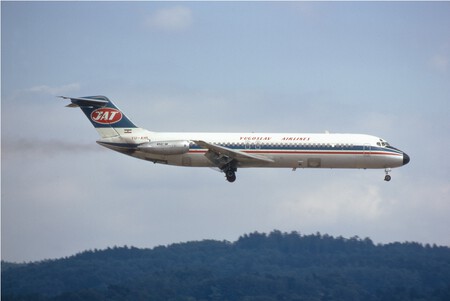
<span>An McDonnell Douglas DC-9 by JAT Airways identical to the accident</span>The Investigation Begins
Authorities quickly turned their focus to the explosion that caused the plane’s disintegration. Czechoslovakian secret services imposed strict controls around the crash site, limiting media access. Meanwhile, claims erupted that a nationalist group had orchestrated the attack, with the Yugoslav government pointing fingers at the Ustaše , an ultra-right Croatian organization . However, despite claims of evidence, the investigation produced no verifiable leads or arrests. The mystery surrounding the incident only deepened.
The Theory of Survival
According to the official narrative , several factors contributed to Vesna’s miraculous survival. It was reported that she was pinned by a catering cart and that the aircraft’s descent was slowed due to air resistance . Moreover, her fall concluded on a snow-covered mountainside, cushioning her impact. This theory was so astonishing that even the popular show MythBusters later explored it and acknowledged that while the chances of survival from such a fall were phenomenally slim, they were not entirely impossible.
The Struggles Following the Crash
After recovering from her life-threatening injuries, Vesna Vulović defied expectations by returning to the sky, becoming a symbol of resilience. In 1973, she was awarded a Guinness World Record for surviving the highest fall without a parachute, a recognition presented to her by Paul McCartney . However, despite the accolades, she struggled with trauma and feelings of guilt regarding her survival, often questioning why she alone had lived.
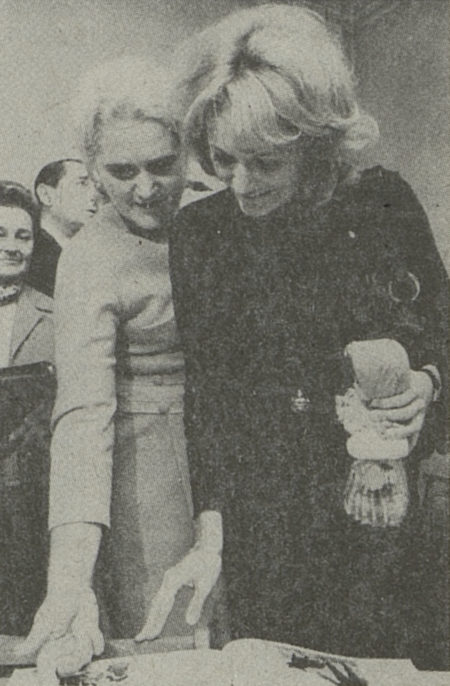
<span>Vulović during her visit to Czechoslovakia, November 1972</span>The Shades of Doubt
Years following the crash, stories began to emerge that cast doubt on the official narrative. In 2009 , investigative journalists discovered documents indicating that the plane might not have been bombed at all, but rather that it had descended under emergency conditions without a threat. This version posited that the aircraft was shot down by the Czechoslovakian Air Force, possibly mistaking it for an enemy aircraft. These revelations reignited discussions about the true nature of the incident. The absence of vital evidence, such as the black boxes , only added to the intrigue.
The Enduring Legacy
Vesna Vulović’s story blurs the lines between tragedy and heroism . Although labeled a national hero in Yugoslavia, her struggle continued well into her later years, as she grappled with survival guilt and the complexities of her newfound fame. When asked about her experiences, she often expressed sorrow for being alive while so many perished that day. Vesna passed away in December 2016 , leaving behind a legacy that challenges our understanding of fate and survival.
Today, her story remains a complex tapestry of mystery and resilience , encapsulating the dichotomy of human experience. Whether one views her fall as a miracle or a cover-up , Vesna Vulović’s legacy will forever intrigue historians, aviation experts, and anyone captivated by stories of survival against all odds.