
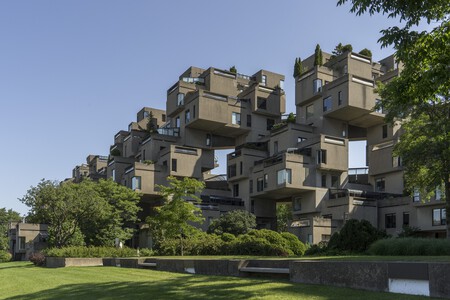
The Vision of Habitat 67
When Moshe Safdie designed Habitat 67 as a young architecture student, his groundbreaking vision employed thousands of Lego pieces to explore how prefabricated housing modules could come together. Safdie’s innovative approach emphasized creating homes that felt individual yet were part of a larger urban landscape. Today, he reflects on that journey, remembering how he emptied entire Lego stores in Montreal for his prototypes.
Reinventing Urban Living
In the early 1960s, Western cities found themselves stuck between the stark realities of massive apartment blocks and sprawling, car-dependent suburbs. Safdie conceived a third option: stacking concrete modules like giant Lego pieces to create a vibrant urban habitat that still afforded families privacy, light, and greenery. Thus emerged Habitat 67—a futuristic icon heralded at the Montreal Expo that offered both wonder and a myriad of challenges.
An Architectural Utopia
Habitat 67 comprises 354 prefabricated concrete modules, each weighing about 90 tons, symmetrically arranged on an artificial peninsula along the St. Lawrence River. The architect’s mission centered on a crucial urban question: how to maintain city density without compromising on personal space and connection to nature. His philosophy—“For everyone a garden”—inspired the integration of gardens, cross ventilation, and elevated pedestrian walkways that deviated from traditional corridor designs. Influenced by the architectural styles of the American Southwest and Japanese modular concepts, Habitat 67 broke new ground.
The Financial Paradox
Ironically, the very design intended to lower housing costs resulted in a much steeper price tag than anticipated. Safdie envisioned a streamlined assembly process that would facilitate quick, cost-effective construction, yet reality imposed severe challenges. The completion of the complex required sophisticated technology, including massive cranes and intricate inter-module connections. This ambitious project ultimately saw a drastic reduction in the number of homes—from an original plan of 1,200 to just 158—driving costs skyward.
Challenges Over Time
As years passed, fresh challenges emerged for Habitat 67. Notably, water infiltration became a significant issue as the design, with its many terraces and joints, created a perfect environment for leaks. Residents reported ongoing battles with mold and moisture, and attempts to repair these issues proved complicated. The building’s intricate, non-conventional design meant that standard repair methods were insufficient. Even as the structure celebrated its 50th anniversary with major renovations, repairs required highly specialized methods to reinforce its resistance against the harsh Canadian winters.
From Social Hope to Elite Icon
Habitat 67’s initial promise as an affordable housing solution ironically transitioned into a symbol of exclusivity. Originally aimed at providing accessible urban living, its high upkeep costs and subsequent privatization led many units to become luxuries priced beyond average means. Today, apartments in Habitat 67 fetch million-dollar prices, turning the visionary “city for all” into a sanctuary for business elites and architectural enthusiasts.
Lasting Impact and Digital Resurrection
Despite its challenges, Habitat 67 continues to inspire architects and urban planners worldwide. Its influence on contemporary modular projects and urban design remains significant, blending density with quality living experiences. Recently, Safdie Architects collaborated with Epic Games to digitally recreate the original, unrealized vision for ‘Project Hillside’—proof that the ideals of Habitat 67 resonate just as powerfully today.
The robust ambitions embedded within Habitat 67, though not entirely successful, reflect a yearning for sustainable urban living that is still pertinent in ongoing discussions about architecture and community. While it serves as a testament to innovation and aspiration, it also symbolizes the ongoing struggle to find effective solutions for urban housing that won’t succumb to the pitfalls of the past.