
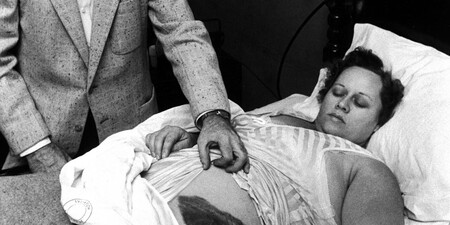
The Remarkable Story of Ann Elizabeth Hodges
Imagine lounging on your couch, relishing a quiet afternoon, only to be jolted by an ear-splitting noise. A rock crashes through your ceiling, obliterates your vintage radio, and heads straight for you. This bizarre yet true story unfolded on a clear afternoon in 1954 when Ann Elizabeth Hodges became the only person recorded to be struck by a meteorite.
The Fallout from Impact
Hodges was indeed fortunate; she sustained only a huge bruise on her thigh from the incident. The meteorite fell at incredible speeds, likely hundreds of kilometers per hour, igniting due to friction as it hurtled toward Earth. Although her injuries were minor, the ensuing chaos pushed Hodges into a hospital—not for her bruise but for a nervous breakdown precipitated by the overwhelming crowd gathered outside her home, curious about the meteorite strike.
The Cold War backdrop of the 1950s heightened tensions, inciting conspiracy theories of foreign planes flying overhead. As a result, the sighting of the meteorite attracted a large following around Hodges’s house, transforming a quiet afternoon into a public spectacle.
The Sylacauga Meteorite Incident
Known as the Sylacauga meteorite due to its landing site in Alabama, Hodges’s fragment was dubbed the “Hodges meteorite.” The complete meteorite, estimated to be half a meter in size, disintegrated into three pieces about nineteen kilometers above the surface, before the fragment struck Hodges.
Eclectic Reactions and Controversies
Following the commotion, U.S. Air Force personnel came to collect the meteorite fragments. The sensational nature of the event fueled media coverage, and potential buyers emerged eager to acquire the celestial rock. In a twist of events, Ann’s husband, Eugene Hodges, enlisted a lawyer to reclaim the meteorite from the government, while their landlord, Bertie Guy, claimed ownership to offset her property damage costs.
Amidst legal wrangling and fading attention, Ann decided to donate the fragment to the Alabama Museum of Natural History. However, she never completely overcame her fear of something else falling from the sky.
Other Cases of Meteorite Encounters
While Ann Hodges is the only verified case of a meteorite injury, there are numerous anecdotal accounts of close calls with extraterrestrial rocks. In August 1992, for instance, a boy in Mbale, Uganda, reported being struck by a pebble after witnessing a fireball in the sky.
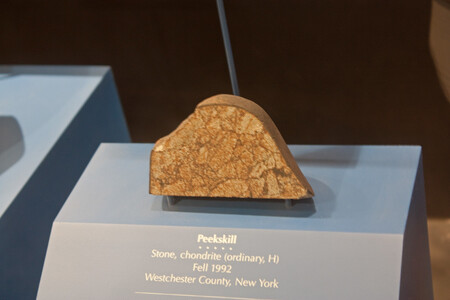
While many stories exist, few can be substantiated scientifically, unlike the Hodges meteorite. Even instances like the 2016 case where a bus driver was supposedly killed by a meteorite were later dismissed by NASA, which found no correlation to known astronomical events.
The Rarity of Meteorite Strikes
With an estimated 10,000 tons of meteoric material entering Earth’s atmosphere annually, the frequency of meteorite strikes on individuals remains remarkably low. This can be attributed to Earth’s vast oceans, which absorb most falling debris, and the significant portion that disintegrates before reaching the ground.
Statistically, the chances of being hit by a meteorite are said to be 1 in 174 million. According to research by engineer Christian Gritzner, this calculation considers various factors, including population density and meteorite entry rates—an alarming yet fascinating insight into our risks from the cosmos.
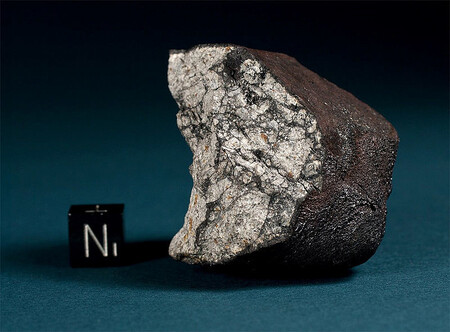
Fragment of the Chelyabinsk meteorite
In conclusion, while the story of Ann Hodges is unique, it serves as a reminder of the fascinating, if daunting, relationship between Earth and outer space. To experience a meteorite strike is indeed rare, but the tale of Hodges continues to intrigue curious minds across generations.
Images | Pxhere, University of Alabama, Wikimedia