
Recently, the news of Mrinank Sharma, who resigned from his role as head of AI Safeguards at Anthropic, has captured public interest. In his open letter, Sharma articulated that “the world was in danger” and expressed his desire to retreat to the United Kingdom for the purpose of studying and writing poetry. This moment reflects a growing trend where individuals contemplate abandoning conventional paths to seek deeper meaning in life.
The notion of reclaiming one’s life has gained momentum in recent years, evolving from concerns over low pay and lack of respect in the workplace to more profound worries about ethics and existential anxiety. The appeal of “leaving everything and going to the mountains” offers practical philosophical arguments for those seeking tranquility in a chaotic world.
The Philosophy of Departure
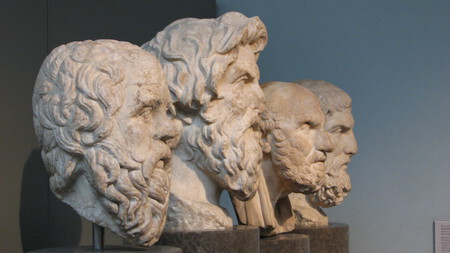
Cristian Bortes – British Museum
Many philosophers throughout history have championed the art of withdrawal. Epicurus, among others, advocated for a retreat to find peace and serenity. This philosophical school viewed life as an opportunity for pleasure and inner tranquility, promoting the idea that by reducing external dependencies, one could live a less anxious life.
Independent Thought

Epicurean thought has often been mischaracterized as mere hedonism. Rather, it promoted seeking a serene environment that minimized distractions and unneeded comparisons. Ultimately, the aim is to create a satisfactory and well-designed life away from the competitive race dictated by societal expectations.
In contrast, other Hellenic schools, such as Stoicism and Cynicism, offered harsher doctrines aimed at achieving true independence, aspiring not only to create a sanctuary but to confront the external world confidently.
The Challenge of Modern Life
Today’s society chains us with obligations—be it through careers, mortgages, or reputational pressures. The desire to leave is not simply a personal choice but an act against this constructed framework. It resonates with the ascetic traditions that emerged throughout history, from hermits seeking solitude to modern social movements advocating withdrawal from discordant lifestyles.
Thinking More Clearly
In modernity, the concept of retreat has evolved into a quest for clarity of thought. Thinkers such as Montaigne and Rousseau sought solitude as a means to attain perspective and mental hygiene, rather than an expression of disdain for society.

This ongoing quest raises the question of how to disconnect effectively in a world that is increasingly difficult to escape from, where digital distractions bind us in myriad ways.
A Form of Protest
In the current political climate, withdrawal often serves as a form of protest. Just as ostracism in classical antiquity carried a punitive undertone, today, opting out can express dissent against an unjust system. Although perceived as a cowardly escape in literature, it’s a conscious choice and reflects a noncompliance that carries weight.
Whether for existential clarity or as a form of protest, the motivations to retreat are multifaceted. As various structural crises loom—accelerating change, cultural saturation, and collective anxiety—the desire for tranquility grows ever stronger.
Conclusion
Today, “going to the mountains” can symbolize more than just an escape; it represents a moral relocation aimed at personal growth and a sincere pursuit of potential. By embracing this philosophy, individuals may find not just solace, but also a renewed sense of purpose.
As Seneca famously noted, “It is not that we have little time to live, but that we do not stop wasting it.” This sentiment resonates deeply as we navigate the complexities of contemporary life.